Eastern India Rice Blog

Gobindo Bhog Rice in Indian

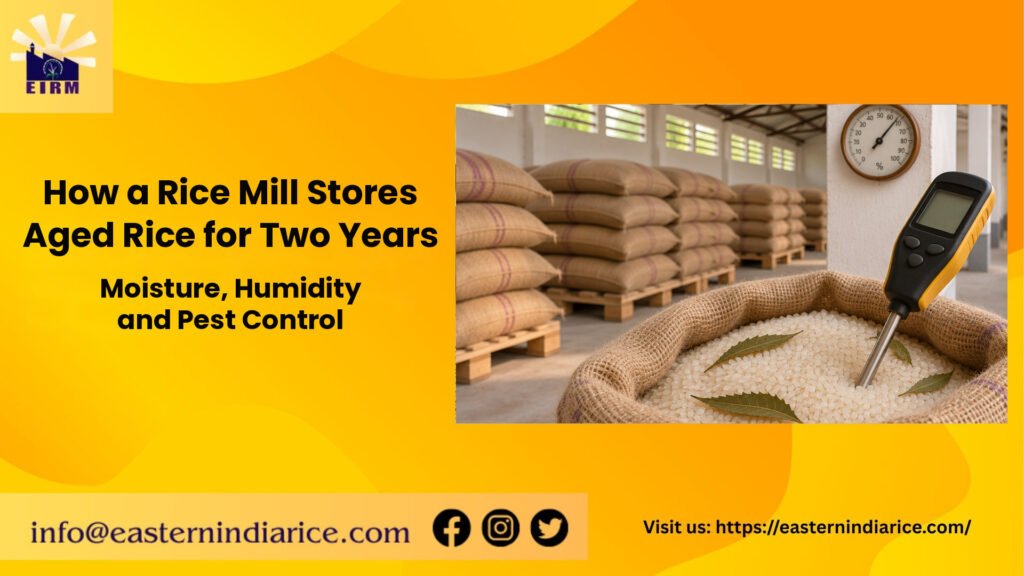
How a Rice Mill Stores Aged Rice for Two Years: Moisture, Humidity and Pest Control
aged-rice-storage-two-years

Why does one supplier’s aged rice cook light and fragrant, while another lot smells musty in the pot? Storage usually explains the difference, because rice keeps changing for months after it leaves the field and before it reaches you. In India, estimates put storage losses alone at about 6.58 per cent of food grains. Good aged rice storage helps prevent these losses through three controls: dry grain, dry air and a clean godown. Why Mills Age Rice Before Selling It Aged rice is rice stored for several months or even years after harvest before it is sold. During this time, the grain slowly firms up, so it absorbs water evenly and the grains stay more separate in your pot. You can see the aged rice vs new rice difference when preparing biryani or ghee rice in your kitchen. New rice is softer and often turns sticky, while well-aged rice holds its shape and gives a fuller cooked aroma. However, the belief that aged rice has no aroma is a myth, because genuine aged Gobindobhog releases its scent only after cooking. If raw rice smells very strong, that smell can warn you of added scent rather than prove its quality. At Eastern India Rice Mill, we explain this difference in the secret behind Gobindobhog aroma. Moisture Control: The First Rule of Aged Rice Storage Moisture affects how long rice stays safe, because damp grain breathes faster, heats up and creates conditions for mould. Tamil Nadu Agricultural University advises drying grain to a safe storage moisture level of 10-12 % for storage lasting 6-12 months. For two-year ageing like ours, the grain has to stay dry through every monsoon, not only on the day it arrives. If grain picks up moisture again, the quality you pay for can suffer within weeks, undoing months of careful storage. Why Paddy Stores Better Than Milled Rice Rice is best stored as paddy, because its husk offers some protection against insects and helps reduce quality loss during storage. Milling just before packing also gives the rice you receive a freshly milled surface and a clean finish. Humidity and Temperature Inside a Rice Godown Even dry grain slowly absorbs water again if the air around the bags stays damp for a long time. In humid Bengal, where our mill is located, a rice godown needs steady protection against moisture during the monsoon. Well-run godowns follow a few simple rules to keep damp floors, walls and air away from your rice: Temperature also matters, because most storage insects breed fastest between 25 and 33 °C. A cool, shaded store can slow their growth, although you still need pest prevention rather than relying on shade alone. Pest Control for Stored Grain Pests Stored grain pests, including the rice weevil and rice moth, can leave you with powder and broken pieces in bags. Prevention therefore starts with cleaning the godown, sealing cracks and using new or cleaned bags for each incoming lot. In FCI godowns, regular prophylactic (spraying of insecticides) and curative treatments (fumigation) are carried out to control insects in stored grain. However, trained operators must handle fumigation under the applicable rules, because these highly toxic chemicals require proper safety controls. If you want to store rice without getting bugs at your shop or home, start with the same housekeeping basics. Keep sacks off the floor and away from walls, then use older stock before opening bags from newer lots. How to Check Aged Rice Before You Buy You cannot visit a godown before every order, but checking the rice itself can reveal warning signs of poor storage. If a sample from the next lot is available, check these points before you decide to place your order. Check Good Sign Warning Sign Smell (raw) Clean, mild Musty or strong scent Grain colour Even, bright Yellow or dark spots Insects None Live insects, webbing Powder Very little Fine dust in the bag Broken grain Few Many broken pieces At Eastern India Rice Mill, our Gobindobhog comes from the fields of Burdwan. We age it for up to two years before it reaches you. We pack our Gobindobhog rice at the FSSAI-licensed Eastern India Rice Mill unit under our own quality control process. Buy Well-Aged Rice From Eastern India Rice Mill Good aged rice storage takes care throughout the ageing period, because time alone cannot protect grain from dampness or insects. Keeping moisture, humidity and pests under control helps preserve the separate grains and rich cooked aroma you expect in biryani. Are you looking for a Malik Deenar rice supplier, or a Double DP brand rice supplier in Kerala? Explore DOUBLE D.P. BRAND ® and MALIK DEENAR ®, then contact Eastern India Rice Mill with the monthly quantity you need for your business. Frequently Asked Questions
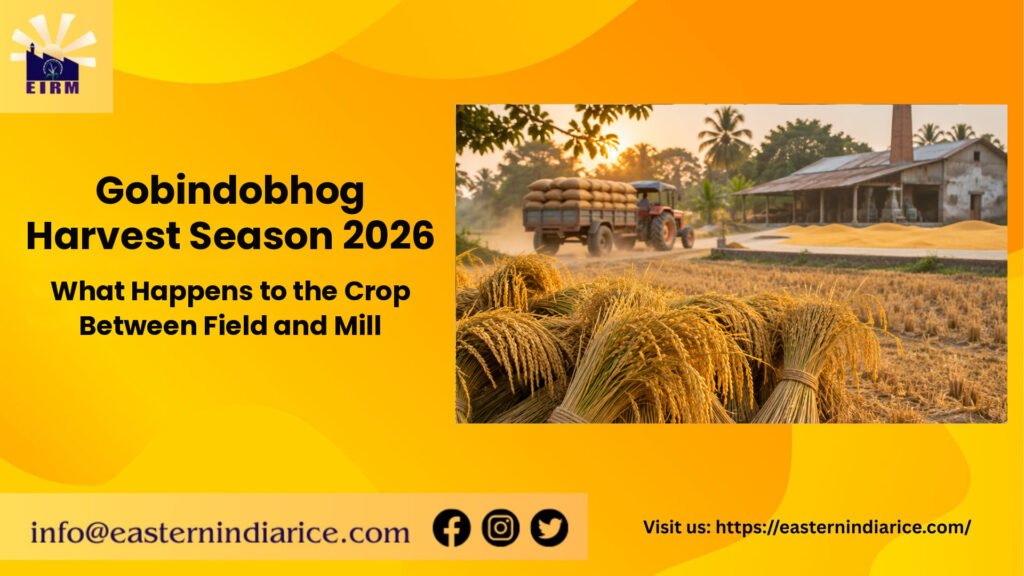
Gobindobhog Harvest Season 2026: What Happens to the Crop Between Field and Mill

gobindobhog-harvest-season-2026

Why do two bags of Gobindobhog from the same district sometimes cook so differently in your kitchen? Much of that difference comes from how farmers and millers handle the paddy in the weeks between harvest and milling. The Gobindobhog harvest season in West Bengal runs through early winter, following a very dry monsoon this year. East and Northeast India received only 1,017.1 mm of monsoon rain, the lowest since 1901. Before you place your next order, understanding what happens after harvest helps you ask more useful questions about quality. When Is the Gobindobhog Harvest Season? Farmers grow Gobindobhog as Aman (the main kharif) rice in West Bengal, planting with the monsoon and harvesting in early winter. This long-duration paddy spends several months in the field, so it is one of the last crops cut in the season. The variety comes from the south Damodar belt of Burdwan and holds Geographical Indication status for this region. That means rice from other regions or other varieties cannot carry the Gobindobhog name when you buy it. The soil and climate of Burdwan help explain this link between the grain and the place where farmers grow it. How the 2026 Season Looks If the crop receives too little water while its grains fill, those grains can remain lighter and yields can fall. This makes the Gobindobhog rice harvesting time especially important for you this year, because careful handling matters even when the crop is smaller. Farmers who cut on time, dry evenly and store carefully can still bring good grain to the mills, even from a smaller crop. Step 1: Cutting the Paddy at the Right Time Farmers cut Gobindobhog when most grains have become hard and the straw has just started to turn yellow. Cutting too early leaves green, immature grains that break easily during milling, reducing the whole grains in your bag. However, if farmers wait too long, ripe grains can shatter and fall in the field before they collect them. Paddy usually has a grain moisture content between 24 and 26% at harvest, so it cannot go straight into milling. The next steps remove this extra water, and they decide much of the quality you finally cook. Step 2: Field Drying, Threshing and Cleaning Traditionally, farmers leave cut bundles in the field for a few sunny days before taking them to their yards. They then separate grain from the stalks with a pedal thresher or by beating bundles on a bamboo platform. Step 3: Drying Paddy to a Safe Moisture Level Drying protects the aroma and strength you expect from Gobindobhog before the paddy goes into storage. Rice mills best at 13-15% moisture content, which means freshly harvested paddy must lose much of its water slowly and evenly. If paddy dries too quickly under hot sun or uneven heat, small cracks can form inside the grain. Although you cannot see these cracks in the field, they can later appear as broken grain in your bag. Step 4: Storing and Ageing the Paddy Rice is best stored as paddy because the husk offers some protection against insects and helps prevent the grain from losing quality. Millers in Burdwan have long stored paddy for months, since aged grain gives you more separate grains and fetches a better price. At Eastern India Rice Mill, our Gobindobhog rice comes from the fields of Burdwan and we age it for up to two years. Many people believe aged rice has no aroma, but that is a myth, because genuine aged Gobindobhog releases its scent only after cooking. Step 5: The Rice Milling Process at the Mill Milling removes the husk and bran to produce white rice, while grading separates whole grains from the broken ones. If you compare Gobindobhog rice manufacturers in India, ask how each one runs the rice milling process. This table shows the paddy to rice process step by step in a modern mill: Stage What Happens Why It Matters to You Pre-cleaning Straw, dust and stones removed Clean, safe grain Husking Outer husk taken off Brown rice for polishing Whitening Bran layer removed Even white colour Grading Whole and broken grains split Fewer broken grains Packing Weighed and sealed Correct weight, fresh bag At the Eastern India Rice Mill unit in Purba Bardhaman, every stage runs under our own quality control process. We keep Gobindobhog as raw rice, because we do not deal in boiled rice at all. What the Harvest Means for the Rice You Buy Before you confirm a bulk order, use these three questions to check the source, age and condition of the rice: Get Well-Aged Gobindobhog From Eastern India Rice Mill A good Gobindobhog harvest season starts the process, but drying, storage and milling determine what finally reaches your kitchen. With careful handling throughout, you get short, even grains that cook separately and release their rich aroma after cooking. Our DOUBLE D.P. BRAND ® and MALIK DEENAR ® both carry rice we age for up to two years. Are you looking for a rice supplier in Bardhaman who knows this crop closely? If you need steady supply for the coming months, contact Eastern India Rice Mill with your monthly quantity. Frequently Asked Questions

Why Fake Rice Brands Thrive, and How to Trace the Mill

fake rice brands

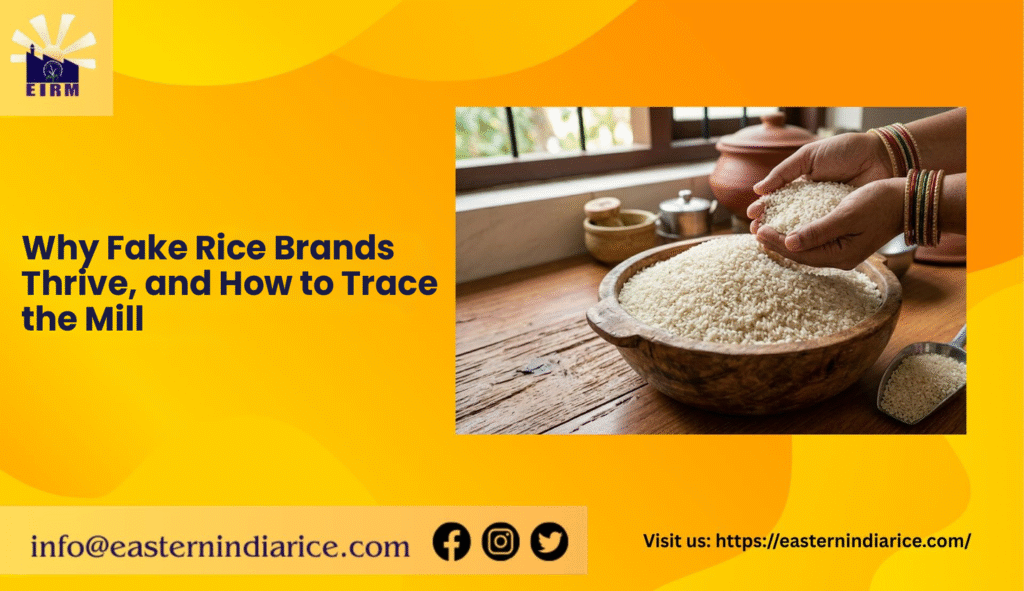
Fake rice brands thrive because the rewards are high, the barriers are low and most buyers cannot verify what is inside a bag. The way to beat them is traceability: tracing a packet back to the mill that produced it. Every real rice brand has a physical mill, a licence and a paper trail. Every fake brand has a gap where that trail should be. This article explains why counterfeit and lookalike rice brands survive in India’s markets and gives you a practical six-step method to trace any packet. The FSSAI licence verification system (FoSCoS) is one of the main public tools you will use. Why fake rice brands thrive 1. The price gap is large. Premium aromatic rice sells well above ordinary rice. A seller who can repack cheaper grain into a premium bag keeps the difference as profit. 2. Rice is hard to judge by eye. Most buyers cannot tell variety, aging or blending from a glance. Unlike a phone or a shirt, the product does not show its quality until it is cooked, by which time the bag is open and the shop is far away. 3. Packaging is easy to copy. A bag, a printed logo and a stitch machine cost little. Small print shops can produce lookalike packs quickly, and a changed letter or two keeps the copy just far enough from the original to look innocent. 4. Supply chains have many layers. Rice often passes through mills, agents, wholesalers, sub-wholesalers and retailers. Each hand-off is a chance to swap, mix or repack. The more layers, the less anyone knows what the original bag held. 5. Festivals create rushed buying. Durga Puja, Onam, Dasara, Diwali and wedding seasons raise demand sharply. Buyers shop in a hurry, stock moves fast and checking gets skipped. 6. Loose rice hides the source. Rice sold loose from open sacks has no label, no batch and no mill address. Branded bags get refilled with whatever is available. 7. Enforcement is hard at small scale. Regulators and brand owners cannot inspect every shop. Small-volume fraud often goes unnoticed, and online listings add another channel where product photos, not product quality, drive sales. 8. Honest brands rarely show their trail. If a brand does not print a mill address or batch details, it makes it easier for copies to hide among the genuine packs. What fake brands cost everyone Buyers pay premium prices for ordinary rice. Retailers lose customers when a bad batch disappoints. Caterers lose reputation when a feast is ruined. The real mill loses trust for products it did not make. The damage compounds because disappointed buyers rarely blame the counterfeiter, whom they cannot identify. They blame the brand on the bag. How to trace the mill: six steps Step 1: Read the pack fully. Find the brand name, manufacturer or packer name, address, FSSAI licence number, batch number and packing date. Photograph the label. If key items are missing, that is already a finding. Step 2: Verify the FSSAI licence. Enter the 14-digit licence number on the FSSAI FoSCoS licence verification page. Check that the business name, address and product category match the pack. A licence that belongs to a different business or a different place is a mismatch. Step 3: Locate the mill address. Search the printed address on a map. A real mill address should resolve to an industrial or agricultural area, not a vague residential lane. Eastern India Rice Mill, for example, prints its mill location in Purba Bardhaman, West Bengal, which makes verification straightforward. Step 4: Check the brand name. Search the brand name and logo in the trademark public search maintained by IP India. A registered brand will be listed with its owner. If the pack’s owner name differs from the registry listing, ask why. Step 5: Contact the brand and the distributor. Send the batch number and a photo of the pack to the brand’s official contact. Ask whether the batch exists and which distributor serves your area. A genuine brand will usually confirm quickly. Also check whether your retailer buys from an authorised distributor and can show a bill. Step 6: Keep a record. For businesses, retain the invoice, a photo of the bag and a sealed sample from each delivery. If a future batch behaves differently, you have a baseline and a paper trail. What a traceable brand looks like A traceable brand has a printed mill address and licence number, batch codes on every bag, a working website and phone line, authorised distributors it can name, and a willingness to answer questions about aging and grain. It also avoids claims it cannot support. Honest labelling is a sign of confidence in the product. A note on exports Exporters of Indian rice are expected to be registered with APEDA, the Agricultural and Processed Food Products Export Development Authority, and to hold the necessary export documentation. If you are an overseas buyer, ask any supplier for their registration, licence and mill details before ordering. The same traceability logic applies across borders, and varieties differ by market: jasmine rice, for example, is a long-grain Thai-origin variety and is a different product from Gobindobhog. Conclusion Fake rice brands thrive in the gaps: price gaps, information gaps and supply chain gaps. You close those gaps by following the paper trail. Read the pack, verify the FSSAI licence, locate the mill, check the brand registration, ask the brand and keep records. A rice that can be traced is a rice that can be trusted, and a brand that welcomes the trace is one worth buying from. Eastern India Rice Mill (EIRM) is a Gobindobhog rice manufacturer based in Purba Bardhaman, West Bengal, and it sells under two brands: Double D.P.® and Malik Deenar®. Double D.P.® is supplied across West Bengal, Kerala and Assam, while Malik Deenar® serves Karnataka and Tamil Nadu. Every pack carries the EIRM mill name and contact details, so buyers and retailers can trace the rice back to its source. To confirm …

Why Fake Rice Brands Thrive, and How to Trace the Mill Read More »

Fake Brand Rice vs Mixed Grain: What’s Inside the Packet

fake-brand-rice-vs-mixed-grain

Fake brand rice and mixed grain are two different problems, and knowing the difference helps you protect your money and your meals. Fake brand rice is about the bag: a lookalike pack that borrows a trusted name. Mixed grain is about the rice: premium grain blended with cheaper grain. A bag can be fake and filled with ordinary rice, or carry a genuine-looking label while hiding a blend. Both are forms of misbranding, which the Food Safety and Standards Authority of India regulates under the Food Safety and Standards Act, 2006. This guide explains what is inside each type of packet and how to tell them apart. Three situations that get called “fake rice” Situation What it means Where the problem sits Fake brand rice A copy of a known brand’s pack, usually filled with cheaper rice Packaging and trademark Mixed grain Premium rice blended with lower-grade or different-variety rice The grain itself Substituted variety A different rice sold under the name of a premium variety Labelling and claims These overlap in the market, but each leaves different clues. What is usually inside a fake brand packet A counterfeit pack typically holds ordinary non-aromatic rice, or a different aromatic variety, repacked to look like the brand. The seller’s profit comes from the gap between the premium price of the brand and the cost of the filler grain. Inside you may find: The packet often looks convincing. The rice rarely survives a cooking test. What mixed grain looks like Mixed grain is harder to catch because the pack can be genuine while the contents are not consistent. Common patterns include: Premium plus filler. A portion of real Gobindobhog is blended with cheaper rice so the bag still smells right on opening but cooks unevenly. Variety mixing. Short-grain rices such as Kalijira, local short-grain types or South Indian aromatic varieties like Jeerakasala and Jeerasambha (Seeraga Samba) are sometimes mixed or substituted. These are good rices in their own right. The issue arises only when they are sold as Gobindobhog. Each variety has its own aroma, grain size and cooking behaviour. Broken-grain loading. Excess broken rice is added to cut cost. It cooks mushy and releases starch, which makes biryani and pulao sticky. Old and new blending. New-crop rice mixed into aged rice. The batch looks uniform but cooks inconsistently, because new rice absorbs less water and softens differently. Why this matters beyond price In most cases the harm is economic: you pay for a premium grain and receive less. But there are practical effects too. Food regulation treats misbranded and adulterated food seriously, which is why proper labelling matters. Counterfeit packaging may also breach trademark law, which protects registered brand names and logos. How to tell them apart at home Look first. Spread the rice on a white plate. A real aged Gobindobhog sample is short, rounded, creamy and fairly uniform. A mixed sample shows more than one grain shape, colour or size, plus many broken pieces. Smell next. Natural aroma is gentle and sweet, and it stays through cooking. Artificial scent is sharp up front and fades fast. Smell the rice both dry and after cooking. Cook a test portion. Cook one cup normally and watch: Compare with a sealed reference. If you buy regularly, keep a small sealed sample of a batch you trust. Any future batch should look, smell and cook the same. Reading the pack for clues A genuine pack and a mixed or counterfeit pack can look alike, but the fine print differs. Check for a clear brand spelling, FSSAI licence number, mill address, batch details and net weight. Be cautious of packs with a claim like “special”, “premium” or “imported” but no information about who milled the rice. A brand that is proud of its source tells you the source. How to buy so you avoid both problems Conclusion Fake brand rice is a pack problem. Mixed grain is a grain problem. A smart buyer checks both: the bag for brand and label details, and the rice for shape, aroma and cooking behaviour. If either fails, do not use the rice for an important meal. The best protection is a source that is open about where its rice is milled. Frequently Asked Questions

Best Gobindobhog Rice Brand in Karnataka: A Festive Quality Check

gobindobhog-karnataka-blog-cover.

The best Gobindobhog rice brand in Karnataka is not the one with the loudest pack. It is the one whose grain, aroma, aging and mill details you can verify before you pay. Karnataka’s festive season, from Dasara in Mysuru to Diwali in Bengaluru, pushes up demand for aromatic rice used in biryani, ghee rice and pulao. Higher demand brings more brands, more lookalike packs and more confusion about what real Gobindobhog is. This guide gives you a simple quality check you can run at home or in a shop. If you want to understand the food safety rules behind packaged rice, the Food Safety and Standards Authority of India (FSSAI) publishes labelling and licensing guidance for packaged foods. What Gobindobhog is, and what it is not Gobindobhog is a short, rounded, aromatic rice from West Bengal, traditionally used for payesh, khichuri and festive pulao. It is not basmati. It is also not the same as South Indian aromatic short-grain rices such as Jeerakasala (Kerala) or Seeraga Samba (Tamil Nadu). These are separate varieties with their own aroma and texture, and they are often confused with each other on shelves. This matters in Karnataka because buyers sometimes expect Gobindobhog to behave like long-grain biryani rice. It does not. It cooks soft, fragrant and slightly cohesive. That makes it excellent for ghee rice, pulao, and soft-style biryani, and less suitable for the dry, long-grain separation expected in classic Hyderabadi dum biryani. How Bengaluru and Karnataka kitchens use it In Bengaluru’s restaurants and catering kitchens, Gobindobhog is chosen for dishes where fragrance must come from the rice itself. Home cooks use it for festival pulao, coconut-based rice dishes and sweet rice preparations. Caterers like it for large-volume cooking because the grain tolerates holding time better than many fresh-harvest rices. If your purpose is biryani, decide the style first. A soft, aromatic, Kolkata or Malabar-style biryani suits Gobindobhog. A dry, long-grained, Hyderabadi-style biryani suits long-grain rice. Choosing the right rice for the right dish is the first quality decision. The 7-point festive quality check 1. Grain shape. Look at dry grains on a plain plate. They should be short, plump and fairly uniform. Long, thin grains mean it is not Gobindobhog, whatever the pack says. 2. Aroma. Rub a pinch between your palms and smell. Genuine Gobindobhog gives a mild, sweet, natural fragrance. A heavy, chemical or perfume-like smell that fades quickly can indicate added scent. 3. Broken grains. Some breakage is normal. Large amounts mean poor milling, old stock or blending with lower grades. 4. Colour. Look for a clean, creamy-white to ivory shade with natural variation. Very bright, glassy white grains can point to heavy polishing. 5. Aging. Ask how long the rice has been aged. Aged rice absorbs water evenly, cooks fluffier and holds shape. A seller who cannot answer is a red flag. 6. Pack information. A responsible brand prints its name, net weight, batch or packing details, FSSAI licence number and the mill or manufacturer address. Missing or blurry details are a reason to pause. 7. Mill traceability. The strongest signal. A brand that names the mill location and responds to questions about it has nothing to hide. Anonymous repacking is where quality problems start. The cooking test that settles it Take one cup of rice and cook it your usual way. Real Gobindobhog should: If the grains split, harden, stay chalky or lose all aroma after cooling, the rice is either mixed or low grade. Festive buying advice for Karnataka For households. Buy from a shop that sells sealed, labelled packs, and keep the bill. Avoid unlabelled loose rice sold as “special Gobindobhog”. Compare two brands side by side with the grain and cooking tests above before committing to a large pack. For restaurants, caterers and retailers. Buy from sources that can show an invoice trail back to the mill or an authorised distributor. Ask for a sample, cook a test batch, and confirm that the batch you receive matches the sample. Consistency across batches matters more than a single good delivery. Timing. Festive weeks are when stock moves fast and lookalike packs enter. Place orders early, and avoid last-minute purchases from unfamiliar sellers. How to judge “best brand” fairly Reviews and ads cannot tell you which rice is best for your kitchen. Use five measurable questions instead: Is the variety correct? Is the aroma natural? Is the rice aged? Is the pack fully labelled? Can the brand be traced to a mill? A brand that scores well on all five is a strong choice. A brand that is vague on any of them is a risk, however well-known it looks. Conclusion Choosing the best Gobindobhog rice brand in Karnataka comes down to evidence, not slogans. Check the grain, test the aroma, ask about aging, read the pack and insist on mill traceability. Do this once, and you will be able to spot a good brand in any festive season, in Bengaluru or anywhere else in Karnataka. Frequently Asked Questions

Gobindo Bhog Rice in Bangalore: Where Restaurants Source Their Stock

eirm-gobindobhog-rice-bangalore

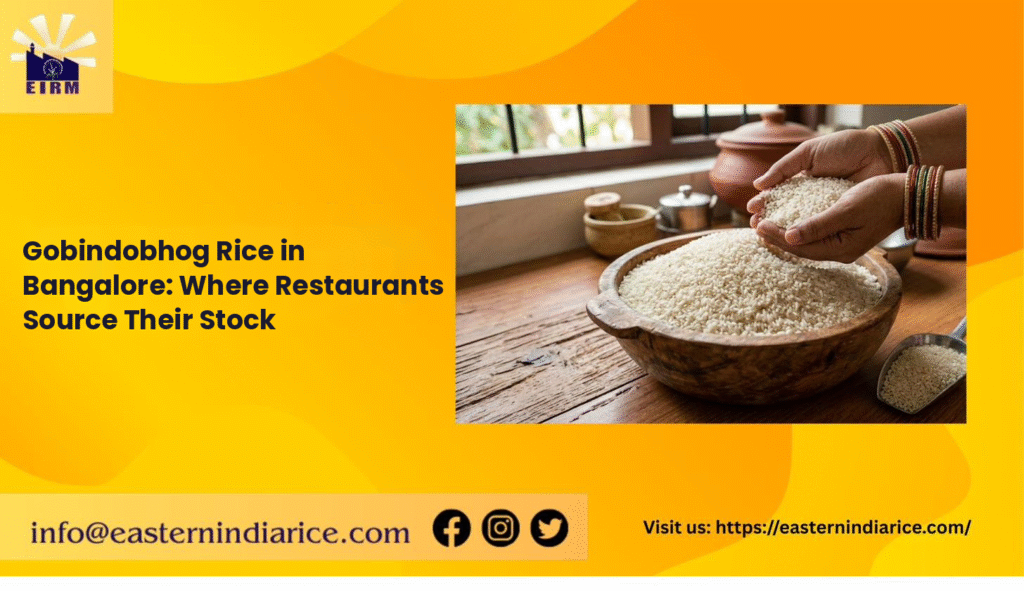
Have you noticed that Kolkata-style biryani tastes perfect at one Bangalore restaurant but feels flat at another? The difference often starts with the rice. Gobindo Bhog rice in Bangalore has become a trusted choice for kitchens that want real Bengal flavour, and the supplier matters as much as the recipe. India’s rice exports reached US$ 12.47 billion in FY25. Still, this fragrant Bengal variety remains a specialty grain. Restaurants need to source it with care if they want its natural aroma to reach the plate. At Eastern India Rice Mill, we supply authentic stock directly to kitchens across the city. Why Bangalore Kitchens Choose Gobindo Bhog Rice Bangalore has every kind of food culture, and its Bengali community keeps demand strong for familiar Bengal grains. Restaurants, hotels, cloud kitchens, sweet shops, and caterers need rice that performs the same way in every batch. Ordinary rice cannot create the taste, texture, or aroma that regular customers expect. Gobindobhog rice in Bengaluru is now used for daily service as well as special menus because it cooks quickly and carries rich flavours without taking over the dish. For steady quality, many kitchens choose one Gobindo Bhog rice supplier in Bengaluru instead of shifting between vendors. Eastern India Rice Mill supports home kitchens and commercial buyers who need a reliable rice supplier in Bengaluru every week. What Chefs Check Before They Buy Price matters, but experienced chefs check the grain first. They want to know whether it has the fragrant natural aroma, whether it cooks evenly, and whether it keeps its shape after steaming. What to check Authentic Gobindo Bhog Ordinary look-alike Grain Short, white, rounded kernel Longer, uneven, hard-polished grain Raw aroma Sweet, buttery, and clear Faint or artificially sprayed After cooking Soft, sticky, and holds shape Turns pasty or breaks up Origin proof Purba Bardhaman, GI-backed Vague or unstated Aging 2 years aged rice Fresh, sharp, and less mellow A raw sniff helps, but a small test cook tells the full story. It shows whether the grain stays soft and sticky or loses its character in the pot. Before placing bulk orders, it is wise to check purity first. At Eastern India Rice Mill, we check both the grain and the cooked result before dispatch. The distinct aroma of real Gobindo Bhog rice comes from more than a label. It comes from the variety, its growing area, careful handling, and proper aging. Where Authentic Stock Comes From Gobindo Bhog rice is a non-basmati indigenous aromatic rice from West Bengal. It grows mainly in the east Burdwan district, especially around the south Damodar plains. Its Geographical Indication (GI) tag connects the grain to this region and its farming heritage. Rice grown outside this belt can look similar, but it often cannot deliver the same sweet buttery flavour after cooking. Stock that is sourced directly from trusted farms keeps more of its aroma because long storage and heavy polishing can reduce it quickly. As one of the trusted Gobindo Bhog rice manufacturers, Eastern India Rice Mill sources from Bardhaman farms, then ensures every lot is cleaned carefully and packed hygienically. That gives kitchens a better chance of receiving aromatic rice without dust, stones, or excess broken grain. Gobindo Bhog Rice Price in Bangalore for 2026 The Gobindo Bhog rice price in Bangalore changes with grade, age, polish level, and pack size. These are practical market ranges to compare before you buy. Wholesale buying gives restaurant menus more room to manage margins. A reliable rice supplier in Bengaluru should clearly explain the grade, order size, and rate per kg before confirming your order. Eastern India Rice Mill offers retail and wholesale options, so families, caterers, and restaurants can buy the right grade without confusion. How Restaurants Buy in Bulk Without Getting Burned A low rate means little if a weak batch arrives during service. Restaurants buy better when they check the basics before committing to regular bulk orders. A practical buying checklist Eastern India Rice Mill supports small packs and bulk orders across Karnataka. You can buy Gobindo Bhog rice online for a home kitchen or arrange a standing supply with our Gobindo Bhog rice supplier in Bengaluru desk. If your menu needs longer-grain biryani rice as well, our Double D.P. biryani rice is a useful option. Get the Grain Your Regulars Remember When you source Gobindo Bhog rice in Bangalore from one dependable supplier, your payesh tastes familiar and your biryani carries the aroma customers expect. Eastern India Rice Mill serves families, caterers, hotels, and restaurants across Karnataka with aged, farm-sourced grain that is packed clean and delivered on time. Whether you need Gobindo Bhog rice in Karnataka for a home meal, pulao, khichuri, or a busy commercial kitchen, our team helps you match the grade and rate to your order. Many people also find this indigenous aromatic rice easier to digest than heavier white rice options. Call 9434049300 / 9593007777, or talk to our team to arrange your first sample. Frequently Asked Questions

Assam Floods 2026 and Rice Supply: A Planning Guide for Wholesale Buyers

eirm-assam-floods-2026-rice-supply

The 2026 Assam floods have disrupted rice movement, local paddy and warehouse conditions across Upper Assam, and wholesale buyers should plan for delayed deliveries and elevated moisture risk rather than assume a normal monsoon cycle. This guide sets out what has changed on the ground, what it means for stock held in Assam, and the storage and quality checks that matter most over the next eight to twelve weeks. Before anything else: this is a humanitarian event first. Relief operations across the affected districts are ongoing, and the guidance below is written for buyers and distributors managing stock, not as commentary on the crisis itself. What has happened The current flood cycle began on 19 July 2026, when a cloudburst in Mon district, Nagaland, pushed the south-bank tributaries of the Brahmaputra – the Dikhow, Disang, Janji and Dhansiri – above danger level. Official figures placed the death toll at 100 as of 10 August, with several rivers still running high. Around 25,000 hectares of standing crop were submerged during the cycle. What makes this event unusual is its geography. Sivasagar, Charaideo, Jorhat, Golaghat and Dibrugarh are Upper Assam districts that do not normally flood at this scale, so a large share of the affected warehousing, road links and rail movement sits outside the routes traders usually treat as flood-exposed. Planning built on previous years’ patterns will under-estimate this one. What it means for rice supply in Assam Three effects matter to wholesale buyers, and they arrive on different timelines. Movement, immediately. Damaged roads, bridges and inundated rail sections in Upper Assam slow inbound consignments and add days to transit. Deliveries scheduled against a normal lead time will run late. Build buffer into purchase orders placed now rather than expediting later. Local kharif paddy, from November. Sali paddy – Assam’s main kharif crop – is transplanted through July and August and harvested from November. Fields submerged during the transplanting window affect that harvest, not current availability. Any supply effect on locally grown rice is a winter question, not an August one. Storage, throughout. This is the risk most buyers under-weight. Ambient humidity in flood-affected districts stays elevated for weeks after water recedes. Rice stored at raised moisture absorbs it further, and that is where stock is quietly lost – not to the water itself, but to what the air does to bags stacked on a damp godown floor. Aromatic varieties carry an extra consideration. Gobindobhog is a short-grain aromatic rice, and its aroma compounds degrade faster in humid storage than in dry conditions. Stock intended for the festive quarter should be rotated and inspected more often than usual. Our guide on why aged rice behaves differently from new-season rice explains the ageing and moisture relationship in more detail. A post-flood storage checklist Apply these to any consignment held in or routed through an affected district: Quality risk rises in a tight market When supply tightens in any region, mislabelling and blending increase. Buyers sourcing aromatic rice during a disrupted period should tighten incoming inspection rather than relax it to keep shelves filled. Our post on how to check Gobindobhog rice purity before you buy sets out the grain, aroma and cook-test checks that need no laboratory. Two practical safeguards: ask for the mill’s despatch documentation on every lot, and confirm that the origin stated on the bag matches the origin on the invoice. Gobindobhog is milled at source in Purba Bardhaman, West Bengal — well outside the current flood-affected districts – so origin documentation is straightforward to verify for genuine consignments and difficult to fake convincingly. Planning the next quarter Order earlier than your normal cycle, hold slightly more buffer than usual, and inspect on receipt. Those three adjustments cover most of the exposure. For buyers building a longer procurement plan, our Assam wholesale rice buying guide covers order sizing, documentation and distributor terms in full, and the bulk procurement guide works through minimum quantities and despatch scheduling. FAQ

Is Gobindobhog Rice Good for Daily Weight Management? A Nutritionist’s Breakdown

Gobindobhog-rice-India

When you think of weight management, your mind might instantly jump to salads, oats, or bland brown rice. But what if you could manage your weight while enjoying a fragrant, fluffy plate of traditional white rice? Today, we are breaking down the nutritional facts of a beloved heritage grain to answer a popular question: Is Gobindobhog rice good for your daily fitness goals? If you live in South India and want to try this premium aromatic grain, you might wonder how to find it. Many fitness enthusiasts actively look to buy gobindo bhog rice in bangalore to balance their clean eating habits with rich, traditional flavors. With mindful eating and balanced meals, Gobindobhog rice can comfortably fit into a healthy lifestyle and support your long-term wellness goals. Let us look at what makes this rice unique from a health perspective. The Nutritional Profile of Gobindobhog Rice Gobindobhog is a short-grain, aromatic white rice traditionally grown in West Bengal. If you are searching for authentic gobindo bhog rice in bangalore to elevate your daily meals, this variety is highly sought after. Unlike heavy, highly processed modern grains, it has unique properties that make it stand out. When you source high-quality grains from trusted names like Eastern India Rice Mill (MINI), you ensure that you are getting the purest form of this rice without any artificial polished shine. Can You Eat It Daily for Weight Management? The short answer is yes, but strategy matters. Many people believe all white rice causes weight gain. However, weight management is entirely about calorie balance, portion control, and food quality. Gobindobhog rice has a secret weapon: it contains a notable amount of resistant starch when cooked and cooled slightly. Resistant starch acts similarly to soluble fiber, passing through your system smoothly and helping you feel full for a longer time. To get the best results from your gobindo bhog rice in bangalore, consider using the “Plate Method”: By using premium grains from a quality brand like EIRM, you get an intense natural aroma. This rich fragrance satisfies your senses faster, which naturally prevents you from overeating! Why Smart Sourcing Matters for Clean Eating Not all rice in the market is processed equally. Adulteration or excessive chemical polishing can strip away the natural micronutrients—like Vitamin B1 and essential minerals—that support your metabolism. Choosing a clean, authentic brand like EIRM guarantees that the grain retains its wholesome dietary benefits. For urban dwellers tracking their daily macros, convenience is just as important as quality. Finding authentic regional grains used to be difficult, but today, you can comfortably explore gobindo bhog rice in bangalore online to get fresh batches delivered directly to your kitchen. Quick Nutritionist Tips for Daily Cooking To maximize your fitness goals with this aromatic grain, keep these simple cooking habits in mind: The Final Verdict Rice is an important part of everyday meals in many Indian homes. However, people who are trying to manage their weight often wonder if they should reduce or avoid rice completely. Among the many rice varieties available, gobindo bhog rice in bangalore has become increasingly popular because of its rich aroma, soft texture, and traditional value.  You do not have to give up your love for comforting, aromatic rice to stay in shape. When eaten in measured quantities alongside proteins and fiber, this heritage grain fits perfectly into a balanced lifestyle. If you are ready to upgrade your daily meals, you can easily look up gobindo bhog rice in bangalore online to start your healthy habit today. Eat mindfully, choose pure grains, and enjoy your fitness journey!

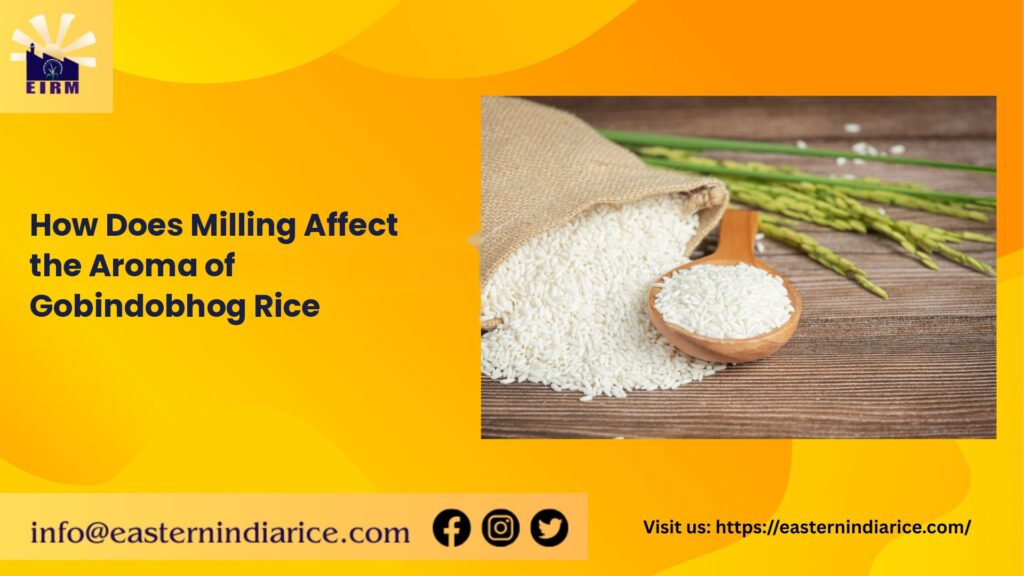
How Does Milling Affect the Aroma of Gobindobhog Rice

gobindo-bhog-rice-aroma-milling

There is something magical about the kitchen when a pot of Gobindobhog rice is bubbling on the stove. It turns out, that enchanting aroma isn’t just luck; it’s a delicate dance of geography, tradition, and time. When done right, it evokes memories of festive feasts and grandmothers’ kitchens with a single breath. The sweet, buttery fragrance fills the home, signaling that a delicious meal is on the way. But have you ever wondered why some packs of rice smell heavenly while others seem a bit “muted”? The answer often lies in the journey from the field to your pantry, specifically the milling process. Leading gobindo bhog rice manufacturers in india know that rough handling destroys this scent. To preserve the ultimate quality, special gobindo bhog rice manufacturers in india use gentle, temperature-controlled milling to lock in that unforgettable Aromatic Rice experience. What is Milling? In simple terms, “milling” is the mechanical process of removing the tough, inedible outer husk and the bran layer from a harvested rice grain to reveal the white kernel inside. While this creates the bright, polished appearance we are used to, it is also where the “scent” of the rice lives or dies. It forces modern millers into a high-stakes balancing act between aesthetics and flavor. Polish the grain too little, and it looks dull and spoils quickly; polish it too much, and you are left with a beautiful but completely odorless kernel. Why Aroma Matters Aromatic rice varieties, like Gobindobhog, contain volatile compounds—tiny molecules that evaporate when heated, releasing that signature scent. Most of these precious compounds are stored in the outer layers of the grain, specifically the bran and the aleurone layer.  When you choose special Gobindobhog rice manufacturers in India, you are choosing brands that understand the delicate balance between appearance and flavor. At Eastern India Rice Mill (MINI), we prioritize techniques that protect these volatile oils rather than stripping them away during high-speed industrial processing. The Impact of Modern Milling Large-scale industrial milling often uses high-speed machines that generate intense heat and friction. This has two major effects:  This is why traditional, careful processing is so vital. EIRM utilizes specialized milling technology that minimizes heat buildup. By controlling the speed and pressure, we ensure the grain stays intact while retaining the natural fragrance that makes this variety so beloved. How to Choose the Best Quality If you are looking for the most authentic experience, keep these tips in mind when shopping for Gobindobhog rice manufacturers in India: Home Storage: Locking in the Freshness Beyond the milling room, how you store the rice at home also plays a major role in keeping that fresh scent alive. Because the volatile oils left behind by gobindo bhog rice manufacturers in india are highly sensitive to airflow and moisture, leaving an open bag loose in your pantry will cause the fragrance to fade within weeks. To protect your investment in premium Aromatic Rice, always transfer the grains into a clean, airtight glass or heavy-duty plastic container immediately after opening. Storing it in a cool, dark cupboard away from direct sunlight and pungent spices ensures that every time you open the lid, you are greeted by the exact same rich, buttery sweetness that special gobindo bhog rice manufacturers in india like EIRM worked so hard to preserve. Preserving the Magic at Home Once you have your premium aromatic rice, store it in an airtight container in a cool, dark place. Exposure to air, humidity, and direct sunlight can cause the remaining aromatic oils to oxidize, dulling the scent over time. By treating your rice as a premium ingredient, you ensure that every bowl of payesh or pulao is as fragrant as the first.  At Eastern India Rice Mill (MINI), we believe that food is an experience. By respecting the grain through gentle milling and proper aging, we bring the true essence of traditional rice to your table. When the aroma fills your kitchen, you’ll know you’ve made the right choice. FAQ

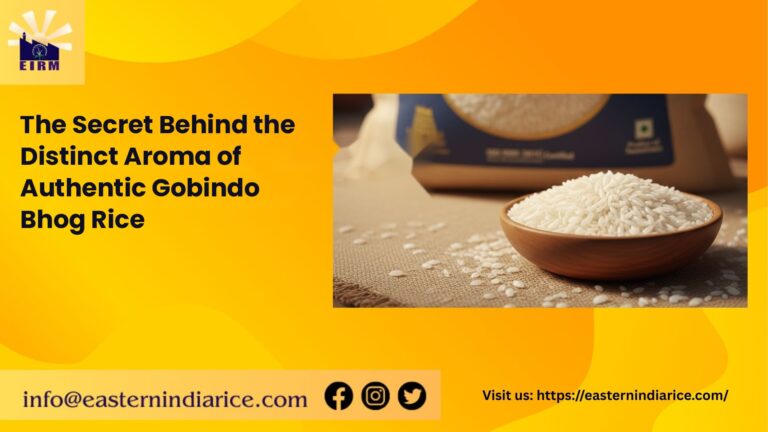
The Secret Behind the Distinct Aroma of Authentic Gobindo bhog Rice

Gobindobhog-rice-aroma

Gobindo bhog rice’s signature aroma comes from 2-acetyl-1-pyrroline (2-AP), a naturally occurring aroma compound also found in popcorn and fresh bread. Gobindo Bhog forms this compound most strongly in Purba Bardhaman, West Bengal. Aging after harvest and low-heat milling protect it. These steps keep the aroma intact until the rice reaches the buyer. What Compound Causes the Aroma in Gobindo bhog Rice? The aroma compound is 2-acetyl-1-pyrroline (2-AP), discovered in 1982 by Buttery and co-workers, who identified it as the principal compound imparting the pleasant aroma to basmati and other scented rice varieties. This popcorn-like aroma compound also appears in pandan leaf and popcorn. 2-AP is chemically unstable. Pure 2-AP degrades within about 10 minutes at room temperature, which is why handling after harvest — not just the rice variety itself — determines whether the aroma survives to the consumer. Why Is Gobindo bhog Rice More Aromatic Than Other Rice Varieties? Three factors compound on top of the genetics: Is Gobindo bhog a Legally Protected Rice Variety? Yes. Gobindo bhog holds Geographical Indication (GI) registration No. 531 in India. The Government of West Bengal filed the GI application in August 2015. After the GI tag, no other region or variety can legally sell rice as “Gobindo Bhog”. This means the name itself is a sourcing guarantee, not a marketing term — comparable to Darjeeling tea or Champagne in how the law treats it. Does Aging Rice After Harvest Increase Its Aroma? Yes, within limits. Freshly harvested Gobindo bhog paddy is not at peak aroma. Controlled aging reduces internal grain moisture and stabilizes aromatic oils that would otherwise dissipate. Under-aged rice loses fragrance; rice aged too long in poor storage conditions goes stale. The aging window is a quality variable that differs between producers — it is not standardized across the category. Why Does Milling Temperature Affect Rice Aroma? Because 2-AP degrades rapidly at room temperature, and high-friction milling generates heat well above that threshold. Milling that runs too hot or too fast can destroy aroma compounds that months of proper aging worked to concentrate. This is a documented mechanism, not a brand claim — it follows directly from 2-AP’s known instability. FAQs

Scroll to Top