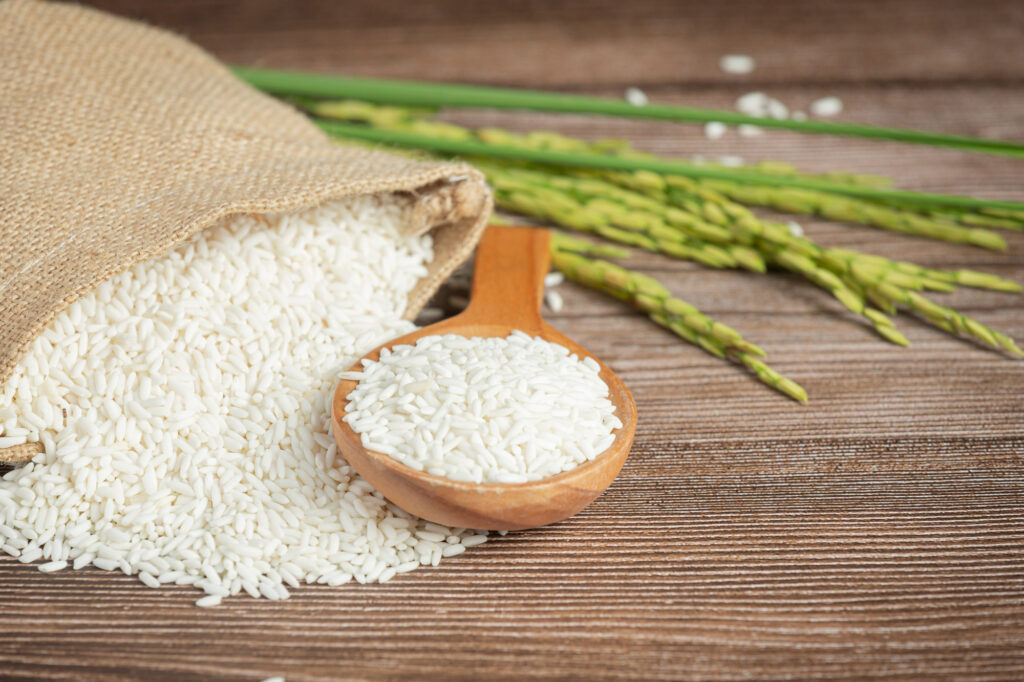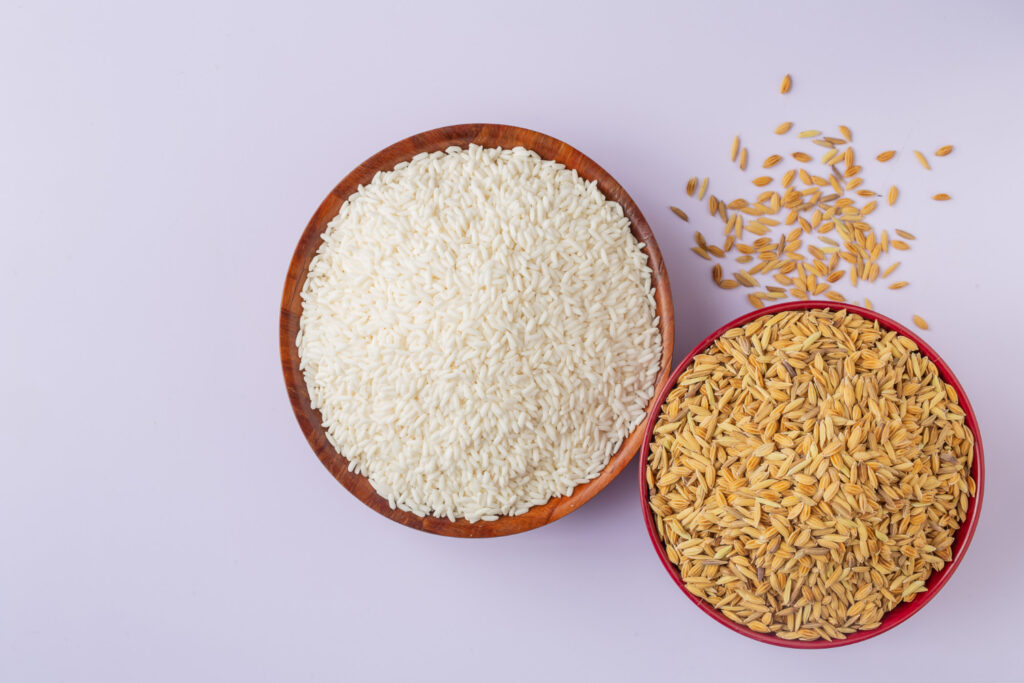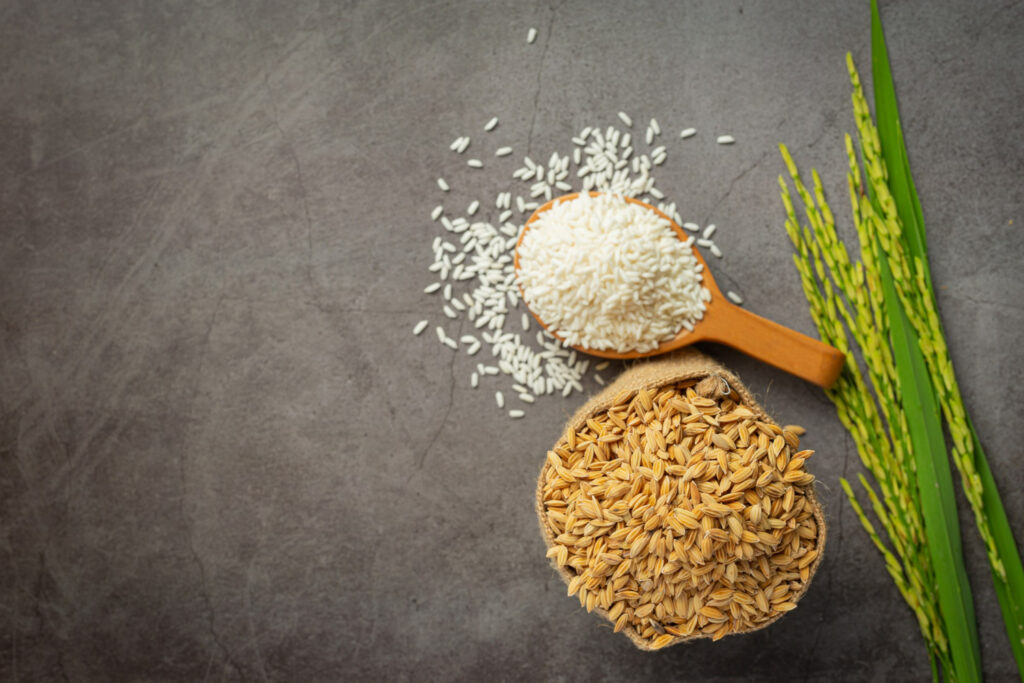
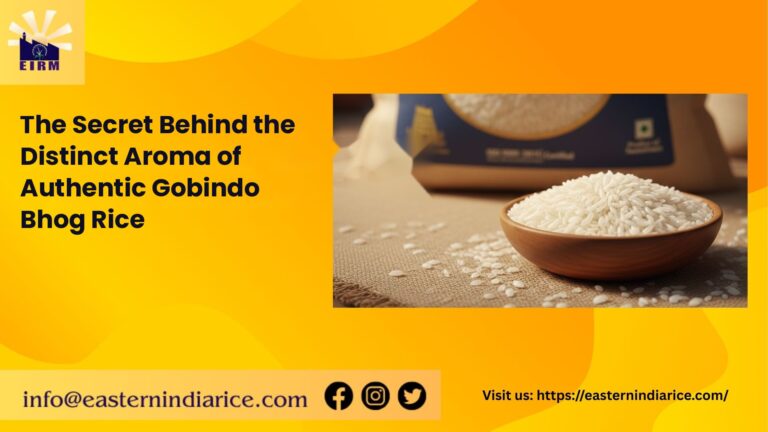
Gobindo bhog rice’s signature aroma comes from 2-acetyl-1-pyrroline (2-AP), a naturally occurring aroma compound also found in popcorn and fresh bread. Gobindo Bhog forms this compound most strongly in Purba Bardhaman, West Bengal. Aging after harvest and low-heat milling protect it. These steps keep the aroma intact until the rice reaches the buyer.
What Compound Causes the Aroma in Gobindo bhog Rice?
The aroma compound is 2-acetyl-1-pyrroline (2-AP), discovered in 1982 by Buttery and co-workers, who identified it as the principal compound imparting the pleasant aroma to basmati and other scented rice varieties. This popcorn-like aroma compound also appears in pandan leaf and popcorn.
2-AP is chemically unstable. Pure 2-AP degrades within about 10 minutes at room temperature, which is why handling after harvest — not just the rice variety itself — determines whether the aroma survives to the consumer.
Why Is Gobindo bhog Rice More Aromatic Than Other Rice Varieties?
Three factors compound on top of the genetics:
- Region-specific soil and climate. Farmers grow Gobindo Bhog mainly in Purba Bardhaman district. The crop sits in the southern Damodar River basin, across Raina 1, Raina 2 and Khandaghosh blocks.
- A 300-year cultivation lineage. Gobindo Bhog is a non-basmati indigenous aromatic rice of West Bengal. Farmers have grown it in the state for about 300 years. Breeders selected it for aroma and grain quality, not yield.
- Late-season planting. Farmers sow the crop after the main monsoon. That timing cuts pest pressure and rain damage versus standard-season rice. The grain then matures more fully.
Is Gobindo bhog a Legally Protected Rice Variety?
Yes. Gobindo bhog holds Geographical Indication (GI) registration No. 531 in India. The Government of West Bengal filed the GI application in August 2015. After the GI tag, no other region or variety can legally sell rice as “Gobindo Bhog”. This means the name itself is a sourcing guarantee, not a marketing term — comparable to Darjeeling tea or Champagne in how the law treats it.
Does Aging Rice After Harvest Increase Its Aroma?
Yes, within limits. Freshly harvested Gobindo bhog paddy is not at peak aroma. Controlled aging reduces internal grain moisture and stabilizes aromatic oils that would otherwise dissipate. Under-aged rice loses fragrance; rice aged too long in poor storage conditions goes stale. The aging window is a quality variable that differs between producers — it is not standardized across the category.
Why Does Milling Temperature Affect Rice Aroma?
Because 2-AP degrades rapidly at room temperature, and high-friction milling generates heat well above that threshold. Milling that runs too hot or too fast can destroy aroma compounds that months of proper aging worked to concentrate. This is a documented mechanism, not a brand claim — it follows directly from 2-AP’s known instability.
FAQs
A: A naturally occurring compound called 2-acetyl-1-pyrroline (2-AP), the same aroma compound found in popcorn and fresh bread crust, concentrated through the rice’s specific growing region and post-harvest handling.
A: No. Gobindo bhog is a short-grain, non-basmati aromatic rice variety, GI-registered separately from basmati, and grown specifically in West Bengal’s Burdwan region.
A: Authentic Gobindo bhog is GI-registered (No. 531) to Purba Bardhaman district, West Bengal, specifically the Raina 1, Raina 2, and Khandaghosh blocks along the Damodar River basin. Rice grown outside this region cannot legally use the name.
A: Variation comes from differences in aging duration and milling temperature control after harvest — both affect how much 2-AP survives intact, independent of the underlying variety being genuine.
A: 2-AP is also generated during the Maillard reaction when rice is heated, so some aroma develops during cooking itself — but only if the raw grain retained enough of the compound through aging and milling to begin with.