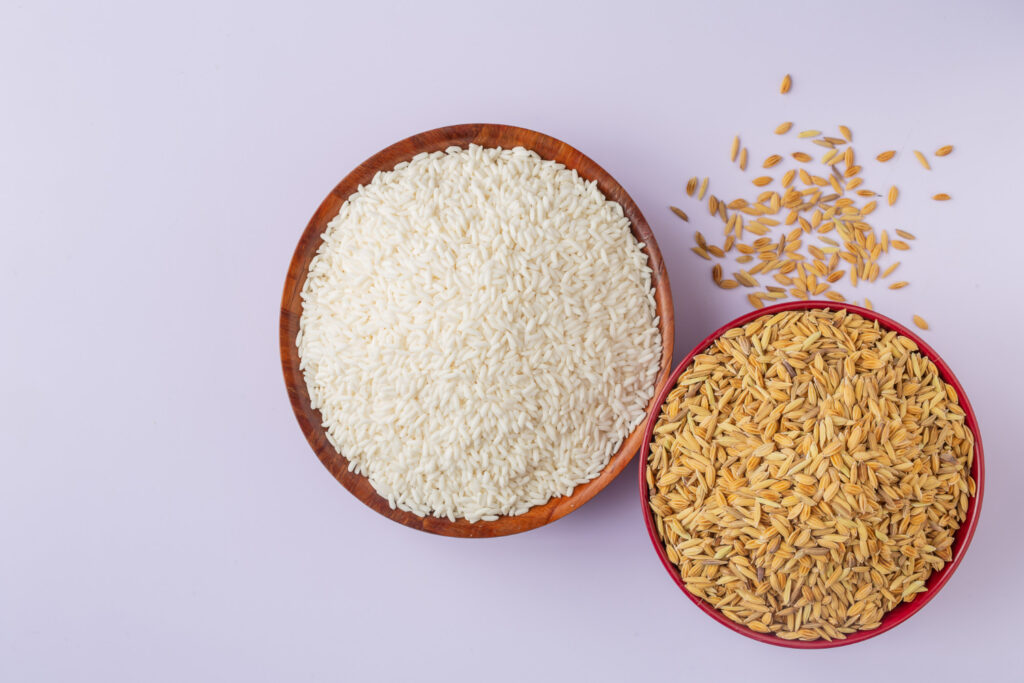

Why does one supplier’s aged rice cook light and fragrant, while another lot smells musty in the pot? Storage usually explains the difference, because rice keeps changing for months after it leaves the field and before it reaches you.
In India, estimates put storage losses alone at about 6.58 per cent of food grains. Good aged rice storage helps prevent these losses through three controls: dry grain, dry air and a clean godown.
Why Mills Age Rice Before Selling It
Aged rice is rice stored for several months or even years after harvest before it is sold. During this time, the grain slowly firms up, so it absorbs water evenly and the grains stay more separate in your pot.
You can see the aged rice vs new rice difference when preparing biryani or ghee rice in your kitchen. New rice is softer and often turns sticky, while well-aged rice holds its shape and gives a fuller cooked aroma.
However, the belief that aged rice has no aroma is a myth, because genuine aged Gobindobhog releases its scent only after cooking. If raw rice smells very strong, that smell can warn you of added scent rather than prove its quality. At Eastern India Rice Mill, we explain this difference in the secret behind Gobindobhog aroma.
Moisture Control: The First Rule of Aged Rice Storage
Moisture affects how long rice stays safe, because damp grain breathes faster, heats up and creates conditions for mould. Tamil Nadu Agricultural University advises drying grain to a safe storage moisture level of 10-12 % for storage lasting 6-12 months.
For two-year ageing like ours, the grain has to stay dry through every monsoon, not only on the day it arrives. If grain picks up moisture again, the quality you pay for can suffer within weeks, undoing months of careful storage.
Why Paddy Stores Better Than Milled Rice
Rice is best stored as paddy, because its husk offers some protection against insects and helps reduce quality loss during storage. Milling just before packing also gives the rice you receive a freshly milled surface and a clean finish.
Humidity and Temperature Inside a Rice Godown
Even dry grain slowly absorbs water again if the air around the bags stays damp for a long time. In humid Bengal, where our mill is located, a rice godown needs steady protection against moisture during the monsoon.
Well-run godowns follow a few simple rules to keep damp floors, walls and air away from your rice:
- Raised floors: Godowns use a pucca plinth and adequate dunnage materials such as wooden crates to stop floor moisture.
- Wall gap: Bags are stacked on dunnage 0.5 metre away from the wall, so damp walls never touch them.
- Stack height: A row of bags should not be more than 15 bags high, leaving air space under the roof.
- Ventilation: Vents open in dry hours and stay shut on humid days, so damp air does not reach the grain.
Temperature also matters, because most storage insects breed fastest between 25 and 33 °C. A cool, shaded store can slow their growth, although you still need pest prevention rather than relying on shade alone.
Pest Control for Stored Grain Pests
Stored grain pests, including the rice weevil and rice moth, can leave you with powder and broken pieces in bags. Prevention therefore starts with cleaning the godown, sealing cracks and using new or cleaned bags for each incoming lot.
In FCI godowns, regular prophylactic (spraying of insecticides) and curative treatments (fumigation) are carried out to control insects in stored grain. However, trained operators must handle fumigation under the applicable rules, because these highly toxic chemicals require proper safety controls.
If you want to store rice without getting bugs at your shop or home, start with the same housekeeping basics. Keep sacks off the floor and away from walls, then use older stock before opening bags from newer lots.
How to Check Aged Rice Before You Buy
You cannot visit a godown before every order, but checking the rice itself can reveal warning signs of poor storage. If a sample from the next lot is available, check these points before you decide to place your order.
| Check | Good Sign | Warning Sign |
| Smell (raw) | Clean, mild | Musty or strong scent |
| Grain colour | Even, bright | Yellow or dark spots |
| Insects | None | Live insects, webbing |
| Powder | Very little | Fine dust in the bag |
| Broken grain | Few | Many broken pieces |
At Eastern India Rice Mill, our Gobindobhog comes from the fields of Burdwan. We age it for up to two years before it reaches you. We pack our Gobindobhog rice at the FSSAI-licensed Eastern India Rice Mill unit under our own quality control process.
Buy Well-Aged Rice From Eastern India Rice Mill
Good aged rice storage takes care throughout the ageing period, because time alone cannot protect grain from dampness or insects. Keeping moisture, humidity and pests under control helps preserve the separate grains and rich cooked aroma you expect in biryani.
Are you looking for a Malik Deenar rice supplier, or a Double DP brand rice supplier in Kerala? Explore DOUBLE D.P. BRAND ® and MALIK DEENAR ®, then contact Eastern India Rice Mill with the monthly quantity you need for your business.
Frequently Asked Questions
Tamil Nadu Agricultural University gives a safe moisture range of 10-12 % for food grains for a period of 6-12 months. When we age rice for two years, moisture, air and pests have to stay under control for that whole period.
If you cook biryani, ghee rice or pulao, aged rice usually gives you grains that stay separate with less stickiness. New rice has a softer texture, so cooks often prefer it for dishes where they want a softer result.
No, the belief that old rice has no aroma is a myth, rather than a reason to reject aged grain. At EIRM, our aged Gobindobhog keeps its aroma inside the grain and releases it during cooking, rather than in the raw bag.
Keep bags on a raised base, away from walls, in a cool, dry room that protects them from dampness. Also, use the oldest stock first and clean the storage area before you bring in bags from another lot.
A musty smell usually means the rice picked up moisture during storage, creating conditions that allow mould to grow. If you notice that smell, keep the lot apart while you check the remaining bags for any damp spots.