Eastern India Rice Blog

Gobindo Bhog rice

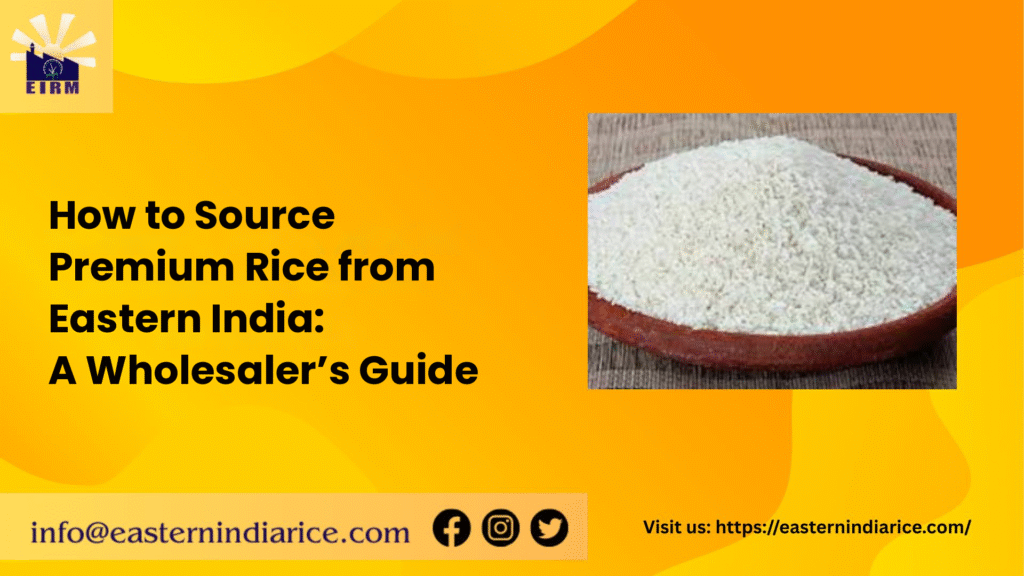
How to Source Premium Rice from Eastern India: A Wholesaler’s Guide

b2b-rice-sourcing-eastern-india-banner

Sourcing premium rice from Eastern India comes down to five checks: verified milling infrastructure, moisture content below 14%, adequate stock aging, transit-grade packaging, and commercial terms settled in writing. The region, centred on West Bengal, grows short-grain aromatic varieties such as Gobindobhog alongside staples like Miniket and Baskati, which is why wholesalers shortlisting a rice supplier in India often start here. This guide covers each check in order. Why do wholesalers source rice from Eastern India? West Bengal is consistently among India’s largest rice-producing states, and its Gangetic alluvial soil supports aromatic varieties that are difficult to grow elsewhere. Gobindobhog, the region’s signature short-grain aromatic rice, is registered as a Geographical Indication (GI No. 531), with cultivation concentrated in districts such as Purba Bardhaman. For a wholesaler this matters in demand terms. Short-grain aromatic rice serves festival cooking, Bengali sweets such as payesh, temple bhog, and regional short-grain biryani styles. Long-grain staples do not cover those segments. Sourcing close to the growing belt also shortens the chain between farm, mill and warehouse, which reduces handling and blending risk. Which rice varieties should wholesalers source from this region? Three varieties carry most of the wholesale demand from Eastern India. Gobindobhog – A short-grain, white, aromatic rice with a naturally sweet, buttery flavour. It is used in Bengali festival cooking, payesh and bhog, and in short-grain biryani formats. Aged stock develops a stronger aroma and cooks less sticky, so always ask for the harvest year and how long the lot has been held. Miniket – A slender long-grain white rice for everyday meals. It is light, digests easily and moves in high volumes, which makes it a dependable base SKU for retail and hotel supply. Baskati – A long-grain variety that stays separate and non-sticky after cooking, which suits biryani and fried rice preparation at volume. How do you verify quality before a bulk order? Test a sample from the exact lot you intend to buy, not a showcase sample. Check three things. First, moisture: it should be below 14% for safe storage. Anything higher risks mold and insect activity in transit and warehousing. Second, uniformity: mills running colour sortex lines deliver grain free of broken kernels, stones and discoloured grains, so ask whether sorting happens in-house. Third, age: freshly harvested aromatic rice has not yet developed its full aroma or cooking texture, so confirm the crop year and the aging period of the stock on offer. Alongside the physical checks, ask for the mill’s FSSAI licence number and batch test reports where available. A supplier that documents its lots is easier to hold to a specification later. What packaging protects bulk rice in transit? Rice absorbs ambient moisture, so packaging is a quality decision before it is a branding one. PP (polypropylene) bags give standard moisture protection at volume. BOPP bags add print quality and durability for retail-facing stock. Jute suits traditional markets and breathable storage, particularly where buyers repack locally. Match the bag to the humidity of the destination market, not just the price sheet. Which commercial terms should you settle before ordering? Put minimum order quantity, credit terms, delivery timelines and the dispute process in writing before the first consignment. Confirm MOQ per variety rather than per order, since aromatic and staple lines often carry different thresholds. Agree who bears transit risk and how shortages or damaged bags are compensated. Clear terms cost nothing upfront; unclear terms surface as disputes during festival-season peaks, exactly when replacement stock is hardest to arrange. Which sourcing mistakes cost wholesalers money? Chasing the lowest quoted price is the most expensive habit in rice sourcing. Unusually cheap lots often signal older stock blended with broken or low-grade grain. Ignoring the crop year is the second mistake: aroma and texture depend on aging, and a fresh lot sold as aged stock will underperform in the kitchen. The third is skipping the sample stage. A bulk order placed on a photograph is a bulk problem waiting to arrive. Sourcing aged Gobindobhog from Purba Bardhaman Verify the mill, the moisture, the age and the terms, and Eastern India’s aromatic varieties can anchor a wholesale line for years. Eastern India Rice Mill mills and ages Gobindobhog rice for up to two years at its unit in Purba Bardhaman, West Bengal, supplying wholesale buyers through Double D.P.® across West Bengal, Assam and Kerala, and Malik Deenar® across Tamil Nadu and Karnataka. For samples, current stock age and wholesale terms, write to info@easternindiarice.com. Frequently asked questions

Which Rice Is Best for Biryani? A Simple Guide to India’s Aromatic Rice Varieties

A Simple Guide to India's Aromatic Rice Varieties

The best rice for biryani is not always basmati. Across South and East India, cooks choose short grain aromatic rice — Seeraga Samba (jeera samba rice) in Tamil Nadu, Kaima rice (also called Jeerakasala or jeera kasala rice) in Kerala, and Gobindobhog in West Bengal — because small fragrant grains absorb masala deeply and hold their shape during slow dum cooking. This guide compares these varieties in plain terms, explains why export buyers group them together as fragrant rice, and answers the questions bulk buyers ask before placing an order. What makes a rice right for biryani Three qualities decide how rice behaves in a biryani pot. The first is aroma: a true fragrant rice releases its scent naturally during cooking, so the dish needs less added flavouring. The second is absorption: the grain must soak up stock, ghee, and spices without turning to paste. The third is grain integrity: each grain should stay separate and whole after layering and steaming. Short grain rice has a natural advantage in the second and third qualities. Smaller grains present more surface area to the masala, and their starch structure keeps them firm through long, sealed steaming. This is why so many regional biryanis outside the basmati belt are built on small-grained varieties. Aging improves all three qualities further. Rice stored for one to two years loses excess moisture, so it cooks drier, absorbs more liquid, and breaks less. This is why experienced biryani cooks and caterers ask for aged rice first and variety second. The short grain aromatic family: four names every buyer compares Seeraga Samba (jeera samba rice). A tiny-grained aromatic rice from Tamil Nadu, named after cumin (jeera) because of its size. It is the traditional base of Ambur and Dindigul biryanis and of most Andhra-style biryani served across South India. It cooks firm and carries spice well. Kaima rice (Jeerakasala / jeera kasala rice). Kerala’s own short grain aromatic variety, central to Thalassery biryani in the Malabar region. The grains are small, lightly fragrant, and cook quickly, which suits the Malabar method of cooking rice and masala separately before layering. Gobindobhog. A short grain aromatic rice from West Bengal, registered as a Geographical Indication (GI) variety of the state. Its grains are small, naturally fragrant, and slightly buttery when cooked. In Bengal it is the rice of festive cooking, and aged Gobindobhog is increasingly used for biryani in Kerala, Karnataka, and Tamil Nadu as a close cousin of the southern short grain types. Jasmine rice. The international reference point for fragrant rice, grown mainly in Thailand. Its grain is long, not short, but Middle East and Southeast Asian importers often use “jasmine” as shorthand for any aromatic table rice, so Indian short grain varieties are frequently compared against it in export enquiries. Why export buyers search for “fragrant rice” Import buyers in the Gulf rarely search by Indian variety names. They search category terms — fragrant rice, short grain rice, aromatic rice — and then compare origins on aroma, grain size, and price. India is the world’s largest rice exporter, and all non-basmati rice shipments must be registered with APEDA, the government authority that regulates agricultural exports. For a Middle East buyer, an Indian mill with APEDA-registered export capability and a named, GI-recognised variety like Gobindobhog is easier to verify than an unnamed “fragrant rice” offer. That verification step is where serious export enquiries usually begin. A typical first enquiry asks for grain length, aging period, moisture level, packaging sizes, and a physical sample — mills that can answer all five in one reply move to the shortlist quickly. Choosing between them: a simple rule Match the rice to the dish and the region. Andhra and Tamil-style biryanis are built on Seeraga Samba. Thalassery biryani calls for Kaima. Bengali cooking and a growing share of South Indian caterers use aged Gobindobhog for its aroma and lower breakage. For bulk buyers, the variety question matters less than three checks that apply to every purchase: is the rice aged, is the supplier licensed, and can they ship consistent quality to your state month after month. A supplier who passes those three checks with one variety is usually a safer choice than a trader offering every variety at once. The FAQ below answers the most common sourcing questions state by state. About Eastern India Rice Mill Eastern India Rice Mill (EIRM), operated by Neelpath Merchandise Pvt. Ltd., is a Gobindobhog rice manufacturer and wholesale supplier based in Purba Bardhaman, West Bengal — one of the state’s main rice-milling districts. The mill specialises in the variety discussed in this guide: short grain aromatic Gobindobhog, aged up to two years before dispatch and grown without chemicals. EIRM supplies distributors and bulk buyers through two registered brands. Double D.P.® serves West Bengal, Assam, and Kerala. Malik Deenar® serves Tamil Nadu and Karnataka, including Bengaluru. Orders work on a wholesale enquiry basis rather than online checkout, and export enquiries for aged Gobindobhog are accepted from Middle East buyers. Frequently Asked Questions

How Does Milling Affect the Aroma of Gobindobhog Rice

gobindo-bhog-rice-aroma-milling

There is something magical about the kitchen when a pot of Gobindobhog rice is bubbling on the stove. It turns out, that enchanting aroma isn’t just luck; it’s a delicate dance of geography, tradition, and time. When done right, it evokes memories of festive feasts and grandmothers’ kitchens with a single breath. The sweet, buttery fragrance fills the home, signaling that a delicious meal is on the way. But have you ever wondered why some packs of rice smell heavenly while others seem a bit “muted”? The answer often lies in the journey from the field to your pantry, specifically the milling process. Leading gobindo bhog rice manufacturers in india know that rough handling destroys this scent. To preserve the ultimate quality, special gobindo bhog rice manufacturers in india use gentle, temperature-controlled milling to lock in that unforgettable Aromatic Rice experience. What is Milling? In simple terms, “milling” is the mechanical process of removing the tough, inedible outer husk and the bran layer from a harvested rice grain to reveal the white kernel inside. While this creates the bright, polished appearance we are used to, it is also where the “scent” of the rice lives or dies. It forces modern millers into a high-stakes balancing act between aesthetics and flavor. Polish the grain too little, and it looks dull and spoils quickly; polish it too much, and you are left with a beautiful but completely odorless kernel. Why Aroma Matters Aromatic rice varieties, like Gobindobhog, contain volatile compounds—tiny molecules that evaporate when heated, releasing that signature scent. Most of these precious compounds are stored in the outer layers of the grain, specifically the bran and the aleurone layer.  When you choose special Gobindobhog rice manufacturers in India, you are choosing brands that understand the delicate balance between appearance and flavor. At Eastern India Rice Mill (MINI), we prioritize techniques that protect these volatile oils rather than stripping them away during high-speed industrial processing. The Impact of Modern Milling Large-scale industrial milling often uses high-speed machines that generate intense heat and friction. This has two major effects:  This is why traditional, careful processing is so vital. EIRM utilizes specialized milling technology that minimizes heat buildup. By controlling the speed and pressure, we ensure the grain stays intact while retaining the natural fragrance that makes this variety so beloved. How to Choose the Best Quality If you are looking for the most authentic experience, keep these tips in mind when shopping for Gobindobhog rice manufacturers in India: Home Storage: Locking in the Freshness Beyond the milling room, how you store the rice at home also plays a major role in keeping that fresh scent alive. Because the volatile oils left behind by gobindo bhog rice manufacturers in india are highly sensitive to airflow and moisture, leaving an open bag loose in your pantry will cause the fragrance to fade within weeks. To protect your investment in premium Aromatic Rice, always transfer the grains into a clean, airtight glass or heavy-duty plastic container immediately after opening. Storing it in a cool, dark cupboard away from direct sunlight and pungent spices ensures that every time you open the lid, you are greeted by the exact same rich, buttery sweetness that special gobindo bhog rice manufacturers in india like EIRM worked so hard to preserve. Preserving the Magic at Home Once you have your premium aromatic rice, store it in an airtight container in a cool, dark place. Exposure to air, humidity, and direct sunlight can cause the remaining aromatic oils to oxidize, dulling the scent over time. By treating your rice as a premium ingredient, you ensure that every bowl of payesh or pulao is as fragrant as the first.  At Eastern India Rice Mill (MINI), we believe that food is an experience. By respecting the grain through gentle milling and proper aging, we bring the true essence of traditional rice to your table. When the aroma fills your kitchen, you’ll know you’ve made the right choice. FAQ

Does 1kg–5kg Premium Rice Packaging Improve Retailer Profit Margins?

Gobindobhog-rice-India

Selling rice in 1kg to 5kg packs usually earns a retailer a better profit margin than selling the same rice loose from 25kg or 50kg sacks. Smaller premium packs support higher per-kilogram pricing, they cut spillage and spoilage, and they turn over faster among the smaller households that now dominate urban buying. For a specialty grain like Gobindobhog rice, the effect is larger still, because shoppers already treat it as a premium purchase rather than a daily commodity. Here is what actually drives the margin difference, and why aromatic rice sits at the top of the list. Why do smaller packs earn a higher margin than loose sacks? A sealed 1kg or 2kg pouch signals hygiene, and shoppers pay for that signal. Rice sold loose from an open sack invites dust, moisture, and pests, so it reads as a low-value commodity and forces you to compete on price alone. A clean, sealed, labelled pack lets you position the same grain as a quality product and hold a firmer retail price. The gap between your bulk buying rate and that shelf price is your margin, and packaging is what widens it. Packaging also carries the information a premium shopper checks before buying: variety, net weight, and packing details. India’s food-labelling rules under the Food Safety and Standards Authority of India require this on packaged food, so a compliant pack does double duty. It builds buyer trust and keeps your store on the right side of regulation. How does packaging reduce a retailer’s losses? Loose rice leaks money. Every scoop spills a little, the top layer draws moisture, and the bottom of a long-standing sack attracts pests. In retail, spilled and spoiled rice is spilled and spoiled cash. Airtight 1kg to 5kg packs remove almost all of that: no scooping loss, longer shelf life, and stock you can count in seconds during inventory. Lower shrinkage means more of what you buy actually reaches the till as revenue. Smaller packs also match how families shop today. Fewer households buy 50kg sacks now; urban buyers want 1kg, 2kg, or 5kg sizes that fit a kitchen shelf and a weekly budget. Smaller units sell more often, which speeds up your stock rotation and your return on each purchase. A shopper who finishes a 2kg pack in a fortnight returns twice as often as one working through a 25kg sack. Why is Gobindobhog rice a high-margin product for shops? Gobindobhog is a short-grain aromatic rice native to the Bardhaman region of West Bengal, and it carries a Geographical Indication tag, GI registration No. 531, which legally reserves the name for rice of that variety and origin. That protected status is exactly why it commands a premium. Buyers associate the name with a specific aroma, a buttery taste, and genuine provenance, not with generic white rice. Common milled rice competes on volume and thin margins. A specialty aromatic rice does not. People buy Gobindobhog for festivals, pujas, biryani, ghee rice, and payasam, and they accept a higher price for it. That demand is now growing well beyond Bengal into Kerala, Tamil Nadu, and Karnataka, and export interest is rising too, supported by the quality-grading and export facilitation offered through APEDA. For a retailer, stocking a recognised aromatic variety in neat retail packs turns a basic staple into a high-value line that does not sit on the shelf. Feature of packaged rice Impact on retailer margin Sealed, labelled packs Supports higher shelf pricing Airtight 1kg-5kg sizes Near-zero spillage and spoilage Smaller pack sizes Faster turnover, quicker ROI Specialty aromatic variety Premium pricing vs commodity rice The bottom line Moving your rice from loose sacks to 1kg-5kg premium packs improves retail margins on three fronts at once. You can charge more for a clean, labelled product. You lose far less stock to spillage and spoilage. And you sell faster to the small households that drive most urban rice buying. With a specialty grain like Gobindobhog, every one of those effects is amplified, because the variety already carries premium expectations and protected-origin credibility. Instead of fighting for paise on loose commodity rice, you are selling a retail-ready product that customers reach for without hesitation. If you are planning your shelves for the coming year, small-pack aromatic rice is one of the simplest margin upgrades available to a grocery store or supermarket. To stock aged Gobindobhog rice in retail-ready 1kg-5kg packs, enquire with Eastern India Rice Mill for wholesale rates in your state. FAQ

The Secret Behind the Distinct Aroma of Authentic Gobindo bhog Rice

Gobindobhog-rice-aroma

Gobindo bhog rice’s signature aroma comes from 2-acetyl-1-pyrroline (2-AP), a naturally occurring aroma compound also found in popcorn and fresh bread. The compound forms most strongly in Gobindo bhog because of its specific growing region — Purba Bardhaman district, West Bengal — combined with proper post-harvest aging and low-heat milling, both of which are required to keep the compound from degrading before the rice reaches the consumer. What Compound Causes the Aroma in Gobindo bhog Rice? The aroma compound is 2-acetyl-1-pyrroline (2-AP), discovered in 1982 by Buttery and co-workers, who identified it as the principal compound imparting the pleasant aroma to basmati and other scented rice varieties. It is described as a popcorn-like aroma compound and is also present in pandan leaf and popcorn. 2-AP is chemically unstable. Pure 2-AP degrades within about 10 minutes at room temperature, which is why handling after harvest — not just the rice variety itself — determines whether the aroma survives to the consumer. Why Is Gobindo bhog Rice More Aromatic Than Other Rice Varieties? Three factors compound on top of the genetics: Is Gobindo bhog a Legally Protected Rice Variety? Yes. Gobindo bhog holds Geographical Indication (GI) registration No. 531 in India. The application was filed by the State Government of West Bengal in August 2015, and as a result of the GI tag, rice from other regions or other varieties cannot legally be branded as “Gobindo bhog”. This means the name itself is a sourcing guarantee, not a marketing term — comparable to Darjeeling tea or Champagne in how the law treats it. Does Aging Rice After Harvest Increase Its Aroma? Yes, within limits. Freshly harvested Gobindo bhog paddy is not at peak aroma. Controlled aging reduces internal grain moisture and stabilizes aromatic oils that would otherwise dissipate. Under-aged rice loses fragrance; rice aged too long in poor storage conditions goes stale. The aging window is a quality variable that differs between producers — it is not standardized across the category. Why Does Milling Temperature Affect Rice Aroma? Because 2-AP degrades rapidly at room temperature, and high-friction milling generates heat well above that threshold. Milling that runs too hot or too fast can destroy aroma compounds that months of proper aging worked to concentrate. This is a documented mechanism, not a brand claim — it follows directly from 2-AP’s known instability. FAQs

How to Check Gobindobhog Rice Purity Before You Buy: A 2026 Guide for South Indian Buyers

Gobindobhog-rice-India

Gobindobhog is a short-grain, non-basmati aromatic rice native to West Bengal, cultivated in the south Damodar belt of Purba Bardhaman for roughly 300 years. It carries a Geographical Indication (GI) tag granted in October 2017, which legally restricts the “Gobindobhog” name to rice grown in its registered region — meaning rice from other areas or varieties cannot lawfully be branded as Gobindobhog. The variety is prized for its sticky texture and milky-sweet fragrance, driven by a low-intermediate amylose content of around 17.9% and a medium-strong natural aroma. It takes its name from its traditional use in temple offerings to Govindajiu, the family deity of the Setts of Kolkata. Although it is a Bengali rice, demand is not confined to the east. Gobindobhog is now a sought-after premium grain in Karnataka, Tamil Nadu and Kerala, where it is used in festive payesh, temple prasadam, and high-end restaurant menus. That growing southern demand is exactly why purity matters: where a premium grain commands a premium price, adulteration follows. The most common form of rice fraud is not an obviously “fake” product — it is the quiet blending of a premium variety with cheaper, lower-quality rice, sold at the premium price. Other tactics include artificial scenting of ordinary short-grain rice to mimic Gobindobhog’s signature aroma, and passing off old or moisture-damaged stock as fresh. For a festive pulao or payesh, the result is flat aroma, uneven cooking, and a texture that never quite holds. Where Eastern India Rice Mill fits Eastern India Rice Mill (EIRM), operating under Neelpath Merchandise Pvt. Ltd. from Purba Bardhaman — the GI heartland of Gobindobhog — addresses these failure points at the source. The mill sources paddy directly from regional farms in the variety’s native belt, then cleans and sorts it on automated milling lines that grade grains for size and uniformity before packing. Its rice is aged for up to two years before sale, a deliberate step that deepens the natural sweetness and firms up cooking texture rather than relying on chemical enhancement. EIRM supplies two distinct premium lines — Double D.P.  and Malik Deenar — across both B2B wholesale and D2C retail channels, serving buyers in West Bengal and the southern states. For a procurement buyer or a kitchen sourcing in bulk, that combination — native-region paddy, two-year ageing, automated grain sorting, and an FSSAI-licensed supply chain — removes the guesswork that loose-market testing can never fully eliminate. That said, knowing the four field tests below is still worth your time — whether you are vetting a new supplier sample or checking a retail pack before a festival. The 4 purity checks you can do before buying 1. Grain size and shape. Authentic Gobindobhog is a short-grain variety — grains are tiny, plump and oval. If the pack shows long, slender, or unevenly broken grains mixed in, cheaper rice has likely been blended. Genuine premium stock is sorted for uniformity. 2. The rub-and-sniff aroma test. True Gobindobhog smells naturally sweet and milky even when raw. Rub a small handful between your palms for a few seconds — the friction releases the grain’s natural oils. A faint, plastic-like, or sharply chemical scent points to artificial perfuming, which rinses off during washing. A genuine grain holds a subtle, earthy fragrance raw that blooms into a buttery aroma only on cooking. 3. Colour. Raw Gobindobhog is a clean, slightly translucent creamy-white to light ivory. Grains that are dead opaque, chalk-white and dull are usually low-grade, high-starch substitutes. 4. The water test. The FSSAI’s DART (Detect Adulteration with Rapid Test) booklet recommends a simple at-home water test: add a couple of teaspoons of rice to a glass of clean water and stir. Pure grains leave the water clear, while artificially coloured or coated grains release colour quickly. As a freshness check, dense, sound grains sink, while hollow, old, or moisture-heavy grains float. Checkpoint Pure Gobindobhog Adulterated / fake Grain shape Tiny, oval, uniform Mixed sizes, long or broken Raw scent Natural, sweet, buttery Chemical smell, or none Colour Soft, translucent ivory Opaque, dull, chalky white In water Stays clear; grains sink Leaches colour; grains float Conclusion Checking grain shape, aroma, colour, and clarity in water will catch most adulterated rice at the shelf — but field tests have limits, especially on bulk orders where a single blended batch can spoil an entire festive run. The dependable safeguard is sourcing from a GI-region, FSSAI-licensed manufacturer that can document where its paddy comes from and how it is processed. Eastern India Rice Mill mills its rice in Purba Bardhaman, the native belt of Gobindobhog, sorts every batch for grain uniformity, and ages its Double D.P.® and Malik Deenar® lines up to two years for natural sweetness and texture — no artificial scenting, no stale stock. For wholesale buyers, distributors, and restaurants across Kerala and Tamil Nadu, that means consistent quality you can verify on arrival. Request a sample or a bulk quote to confirm the grain before you commit. FAQ

How Climate and Soil Conditions Influence the Quality of Gobindo Bhog Rice

Gobindobhog-rice-India

Rice is not just food in India; it is a celebration of flavor, culture, and tradition. Among the many varieties grown across the country, one short-grain white rice stands out for its rich, buttery taste and heavenly fragrance. This variety is none other than Gobindo Bhog rice. Often called the “Prince of Rice,” it holds a special place in sweet dishes, festive offerings, and savory meals alike. If you have ever enjoyed a rich, aromatic bowl of biryani made with this short grain, you know it is a truly special biryani rice. But have you ever wondered what makes this grain so magical? The secret lies deep within the nature of its birthplace—specifically, the perfect mix of climate and soil conditions.  At Eastern India Rice Mill (MINI), we believe that understanding the journey of the grain from the farm to your plate makes every bite taste even better. Let us explore how mother nature shapes this exquisite grain. The Right Soil: The Foundation of Taste The quality of Gobindo Bhog rice depends heavily on where it is grown. This grain thrives beautifully in the fertile plains of West Bengal, particularly in the Burdwan district, which is proudly known as the “rice bowl” of the region.  The soil here is alluvial soil, which means it is rich in organic matter and natural nutrients washed down by the river systems. This unique soil behaves like a natural sponge. It holds onto water just long enough to give the rice crops steady nourishment without drowning the roots. The minerals present in this alluvial soil are exactly what give the rice its signature sweet, buttery flavor profile. Because this soil cannot be replicated easily anywhere else, special gobindo bhog rice manufacturers in india focus heavily on sourcing their paddy directly from these geographical zones to keep the taste authentic.  The Ideal Climate: Crafting the Sweet Aroma If soil gives the rice its taste, the climate gives it that unmistakable, mouth-watering fragrance. Gobindo Bhog is a unique crop because it is traditionally cultivated a bit later in the season, mostly during the Kharif (monsoon) season, stretching into the cooler months. This specific weather cycle ensures that when you open a bag of rice packed by EIRM, the natural perfume fills your kitchen instantly. Water and Natural Protection Because Gobindo Bhog is planted slightly later than standard rice varieties, it escapes the harsh, heavy downpours of the early monsoon that often damage younger crops. The gentle, residual moisture left in the soil and air is just right. Additionally, this late-timed climate naturally protects the crop. The cooler weather patterns mean fewer pests and insects attack the fields. Farmers do not need to rely on heavy chemicals or artificial pesticides. This allows the rice to grow naturally, maintaining its pure, clean, and healthy properties. Top gobindo bhog rice suppliers in india value this natural purity because it ensures the grain remains easily digestible and safe for families.  Why Choose EIRM for Your Kitchen? Sourcing the absolute best version of this regional treasure requires expertise and deep roots in the farming community. As a trusted name in the industry, EIRM works closely with experienced local farmers who have spent generations mastering this delicate agricultural art. We pick only high-grade seeds and ensure that the rice goes through a careful aging process under controlled settings. Aging the rice allows the grains to dry out evenly, which helps them cook beautifully without becoming mushy, while making the aroma even stronger.  Conclusion The unmatched quality, sticky texture, and divine fragrance of Gobindo Bhog rice are gifts of perfect weather and nutrient-rich alluvial earth. It is a grain crafted by nature and perfected by tradition. Whether you are cooking a celebratory festive pulao, a comforting bowl of sweet payesh, or experimenting with a regional twist on a special biryani rice, choosing the right grain makes all the difference. By blending nature’s best conditions with strict quality control, Eastern India Rice Mill (MINI) ensures that every bag delivered to your home carries the genuine heritage of Bengal’s finest fields. FAQ   

Gobindo Bhog Rice Nutrition Facts: Calories, Carbs, and Health Value Explained

Gobindobhog-rice-India

If you love aromatic food, you probably know about Gobindo Bhog rice. It is a small-grain, white rice that smells heavenly. People use it to make delicious dishes like khichdi, payesh (kheer), and pulao. But did you know this tasty rice is also packed with great health value? When looking for the best quality grain, it is essential to trust the top special gobindo bhog rice manufacturers in india. They ensure that the rice retains its natural nutrition, unique buttery flavor, and authentic aroma from the farm to your plate. Let us dive deep into the nutrition facts, calories, carbs, and health benefits of Gobindo Bhog rice to understand why it deserves a spot in your daily kitchen. What is Gobindo Bhog Rice? Gobindo Bhog is a premium, short-grain aromatic rice. It is named after its traditional use in preparing offerings for Lord Govinda. Because of its superb quality and sweet scent, it has received a Geographical Indication (GI) tag. Brands like Eastern India Rice Mill (MINI) bring you this authentic grain with its nutrients completely intact, ensuring you get the maximum health value with every single bite. Nutrition Breakdown: Calories and Carbs Many people think that white aromatic rice is just empty starch. That is not true! Gobindo Bhog rice provides clean, easily digestible energy. Here is what you get in a standard serving of about 100 grams of raw Gobindo Bhog rice: The Role of Carbohydrates As you can see, this rice is rich in healthy carbohydrates. These carbs are complex, meaning they break down slowly to give your body steady energy throughout the day. It is an excellent fuel source for kids, athletes, and anyone with an active lifestyle. Low in Fat and Sodium If you want to maintain a healthy weight or take care of your heart, this rice is a great option. It has almost zero fat and very low sodium content, which helps keep your blood pressure levels in check. Trusting experienced gobindo bhog rice suppliers in india ensures you get pure, unadulterated grains that keep these heart-healthy traits alive. Top Health Value and Benefits Gobindo Bhog rice is more than just comfort food. It brings several health benefits to your dinner table: Cooking It Right for Maximum Nutrition To keep the health value high, cook your rice using the boiling method. Try to avoid discarding the excess water if you want to save all the water-soluble vitamins. Alternatively, you can use a measured amount of water (usually a 1:2 rice-to-water ratio) so the grains absorb everything perfectly. Pairing a hot bowl of Eastern India Rice Mill (MINI) Gobindo Bhog rice with lentils (dal) and a side of fresh vegetables creates a completely balanced meal filled with protein, fiber, and vitamins. Buying Guide: Finding the Best Rice Because of its high demand, the gobindo bhog rice price in india can vary depending on the season and the purity of the grain. Sometimes, cheaper versions are mixed with lower-grade short rice that lacks the authentic aroma. To avoid this, always check the packaging carefully. Choosing premium brands like EIRM guarantees that you are getting 100% pure, single-origin grains. As trusted gobindo bhog rice suppliers in india, they make sure that you get the best value for your money. Conclusion Gobindo Bhog rice is a delightful combination of taste, aroma, and good health. It gives you long-lasting energy, is gentle on the stomach, and provides essential nutrients to support your body’s wellness. When you purchase from the best special gobindo bhog rice manufacturers in india, you invest in your family’s overall health. Bring home a pack today, cook a steaming bowl, and enjoy the perfect balance of pure nutrition and incredible taste! FAQ

Bringing Premium Short-Grain Aromatic Biryani Rice to Global and Indian Kitchens

Short-Grain Aromatic Biryani Rice to Global and Indian Kitchens

Food connects people across cultures, traditions, and countries. Among all dishes loved around the world, biryani holds a special place in every food lover’s heart. The secret behind a perfect biryani is not only spices or cooking style, but also the quality of rice used. Today, premium short grain rice is becoming a popular choice in both Indian and international kitchens because of its rich aroma and soft texture. Brands like Eastern India Rice Mill (MINI) are helping bring high-quality aromatic rice varieties from farms to dining tables, making traditional flavors easily available to everyone. The Growing Love for Short-Grain Rice For many years, long-grain rice varieties dominated global markets. However, food lovers are now rediscovering the beauty of short grain rice. This rice type is known for its slightly sticky texture, soft grains, and ability to absorb flavors beautifully. When cooked, short-grain rice becomes tender and flavorful, making it perfect for biryani, pulao, sweet dishes, and festive meals. Its natural taste enhances spices instead of overpowering them, allowing every ingredient to shine. In Indian households especially, short-grain varieties have always been part of traditional cooking. Now, chefs worldwide are also choosing them for authentic recipes. Why Fragrant Rice Makes a Big Difference A great meal always begins with aroma. The moment rice starts cooking, the kitchen fills with a warm and inviting smell that builds excitement for the meal. This is where premium fragrant rice stands out. High-quality fragrant rice releases a natural aroma during cooking without the need for artificial flavoring. This quality makes dishes richer and more enjoyable. Whether preparing biryani, khichdi, or festive offerings, aromatic rice improves both taste and presentation. Consumers today are more aware of food quality. They prefer rice that is naturally grown, carefully processed, and packed to preserve freshness. Trusted brands like EIRM focus on maintaining these standards so families receive rice that delivers consistent flavor every time. The Importance of Trusted Gobindobhog Rice Manufacturers One of India’s most loved aromatic rice varieties is Gobindobhog rice. Known for its small grains and sweet fragrance, it plays an important role in traditional Bengali cuisine and festive cooking. Reliable gobindobhog rice manufacturers ensure that this heritage rice variety maintains its authenticity. Proper sourcing, careful milling, and hygienic packaging are essential steps in preserving quality. Experienced gobindobhog rice manufacturers work closely with farmers to maintain purity and protect the traditional characteristics of the grain. This dedication helps bring authentic taste not only to Indian homes but also to international markets where demand for premium rice is growing rapidly. From Indian Farms to Global Kitchens Indian rice varieties are now reaching kitchens across continents. Restaurants, hotels, and home chefs worldwide are exploring regional ingredients to create authentic dishes. Premium short-grain aromatic rice is gaining popularity because it suits both traditional and modern recipes. With strong sourcing networks and modern processing methods, EIRM plays an important role in connecting Indian agriculture with global food demands. By maintaining quality from farm to packaging, the brand ensures that customers receive fresh and naturally aromatic rice wherever they are. As global consumers search for genuine culinary experiences, Indian fragrant rice varieties continue to gain recognition. Perfect for Everyday Cooking and Special Occasions One of the biggest advantages of short grain rice is its versatility. It works equally well for daily meals and festive celebrations. From biryani and pulao to desserts and temple offerings, this rice adapts easily to different cooking styles. Premium fragrant rice absorbs spices, ghee, and herbs beautifully, giving dishes a rich and comforting flavor. Families appreciate rice that cooks evenly and remains soft without becoming mushy. This balance of taste, aroma, and texture makes aromatic short-grain rice a preferred option for modern kitchens. Supporting Tradition with Modern Quality Today’s consumers want food that combines tradition with safety and quality standards. Trusted gobindobhog rice manufacturers are using improved technology while preserving traditional farming practices. Careful cleaning, grading, and packaging help maintain freshness and nutritional value. This approach ensures that heritage rice varieties continue to reach future generations without losing their originality. Brands like Eastern India Rice Mill (MINI) support farmers and promote premium rice varieties that celebrate India’s rich food culture while meeting global expectations. A Flavorful Future for Aromatic Rice As food trends continue to evolve, the demand for authentic ingredients is growing stronger. Premium short-grain aromatic rice represents comfort, tradition, and quality in every grain. From Indian households preparing family meals to international chefs creating signature dishes, fragrant rice is becoming an essential ingredient worldwide. With reliable gobindobhog rice manufacturers and quality-focused brands leading the way, the journey of aromatic biryani rice is expanding beyond borders. Choosing the right rice transforms cooking into an experience filled with aroma, taste, and tradition — bringing the true essence of Indian cuisine to kitchens everywhere.

Best Rice Choices for Suhoor and Iftar During Ramzan

Best Rice Choices for Suhoor and Iftar During Ramzan

Selecting the right rice for Ramzan meals is essential for balanced nutrition, taste, and comfort. Suhoor requires rice that provides sustained energy, while iftar dishes benefit from aromatic and flavorful grains that enhance festive cooking. Short-grain aromatic varieties such as Gobindo Bhog rice are widely preferred for traditional dishes, sweets, and light meals. Their natural fragrance and soft texture make them suitable for both suhoor and iftar preparations. Many households source from Gobindo Bhog rice suppliers in India, including regions like Tamil Nadu, Karnataka, Kerala, and Assam, due to consistent quality and availability. For richer dishes like biryani served during iftar, aromatic biryani rice varieties are ideal. Buyers often look for reliable suppliers offering Gobindo Bhog biryani rice or premium aromatic rice suited for long cooking hours. Choosing the right supplier ensures stable pricing, especially during high-demand periods like Ramzan. EIRM works closely with buyers across South India and beyond, supporting wholesale requirements in cities such as Bengaluru, Chennai, and Kochi. With access to trusted rice suppliers in Tamil Nadu, Kerala, and Karnataka, families and food businesses can confidently prepare Ramzan meals that reflect tradition and quality.

Scroll to Top