Durga Puja Bhog Khichuri: Why Gobindobhog Is the Only Rice That Gets It Right
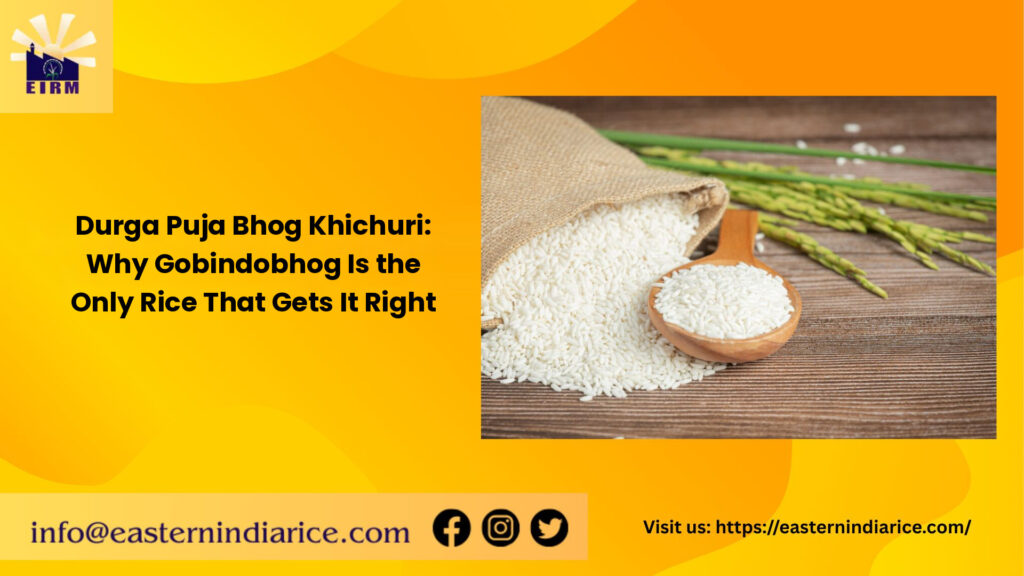
Gobindobhog is the rice that makes Durga Puja bhog khichuri taste the way Bengal remembers it: soft, fragrant, glossy with ghee, and never mushy. Every autumn, pandals across West Bengal and Bengali homes across India serve this khichuri as the central bhog offering. The dish looks simple, but it is unforgiving. The wrong rice turns it dry, sticky or flavourless. Gobindobhog is a short, rounded, aromatic variety that is listed in the Geographical Indications registry maintained by IP India as a rice of West Bengal. That recognition exists because the grain behaves differently in the pot, and bhog khichuri is the dish where that difference shows the most. What makes bhog khichuri different from everyday khichuri Everyday khichuri is a comfort meal. Bhog khichuri is an offering. It is cooked without onion and garlic, uses roasted moong dal, ghee, ginger, cumin, bay leaf and a small set of seasonal vegetables such as cauliflower, potato and green peas. Because the ingredient list is short, nothing hides behind masala. The fragrance of the rice itself carries the dish. That is why the grain choice is not a matter of habit. It is a matter of structure. Bhog khichuri needs grains that soften fully, bind gently with the dal, and still stay individually visible on the leaf plate. Few rices manage all three. Why the grain decides the dish Gobindobhog has a short, rounded shape, which is often misdescribed as long and slender. It is nothing like basmati. The grain is small and plump, and it carries a natural, sweet aroma that comes from aroma compounds such as 2-acetyl-1-pyrroline, which researchers have studied widely in scented rices (you can browse the published work on NCBI PubMed). Three properties matter for khichuri: Why basmati and other rice fall short Many kitchens outside Bengal substitute basmati because it is familiar. The result is a different dish. Basmati’s long, slender grains cook dry and separate. Its strong, distinct perfume competes with ghee and roasted dal instead of blending with them. The finished plate looks like pulao with dal, and it lacks the soft, spoonable texture of a proper bhog. Plain non-aromatic short-grain rice has the opposite problem. It binds well but tastes flat, and the dish loses the festive fragrance that makes it feel like prasad. Gobindobhog sits in the narrow gap where texture and aroma both work. The role of aging Aged rice is a trade secret in many Bengali kitchens and mills. Freshly harvested rice holds more moisture and cooks stickier. After months of aging, the grain dries gently, absorbs water more evenly and holds its shape better in the pot. For a dish that is stirred, simmered and served in large quantities, that stability matters. It is the reason traditional buyers ask how old the rice is before they ask what it costs. How to cook bhog khichuri with Gobindobhog Treat these as guide values, since grain age and dal type change the water needs. What to serve with it The classic Durga Puja plate pairs khichuri with labra (mixed vegetable curry), begun bhaja (fried aubergine), tomato chutney, papad and payesh. The payesh is worth noting: it is also traditionally made with Gobindobhog, which is one more reason this single variety quietly runs the whole festival menu. A buying checklist before Puja Festival demand brings lookalike packs into the market, so check before you buy: Conclusion Bhog khichuri is a test of ingredients, and rice is the biggest one. Gobindobhog passes because its small, aromatic, soft-cooking grain matches what the dish asks for: fragrance, body and a gentle bind with roasted dal. Basmati makes a different dish and plain rice makes a flat one. This Durga Puja, check the grain, smell it, read the pack and cook it slowly. Done right, the khichuri will taste like the festival itself. Frequently Asked Questions