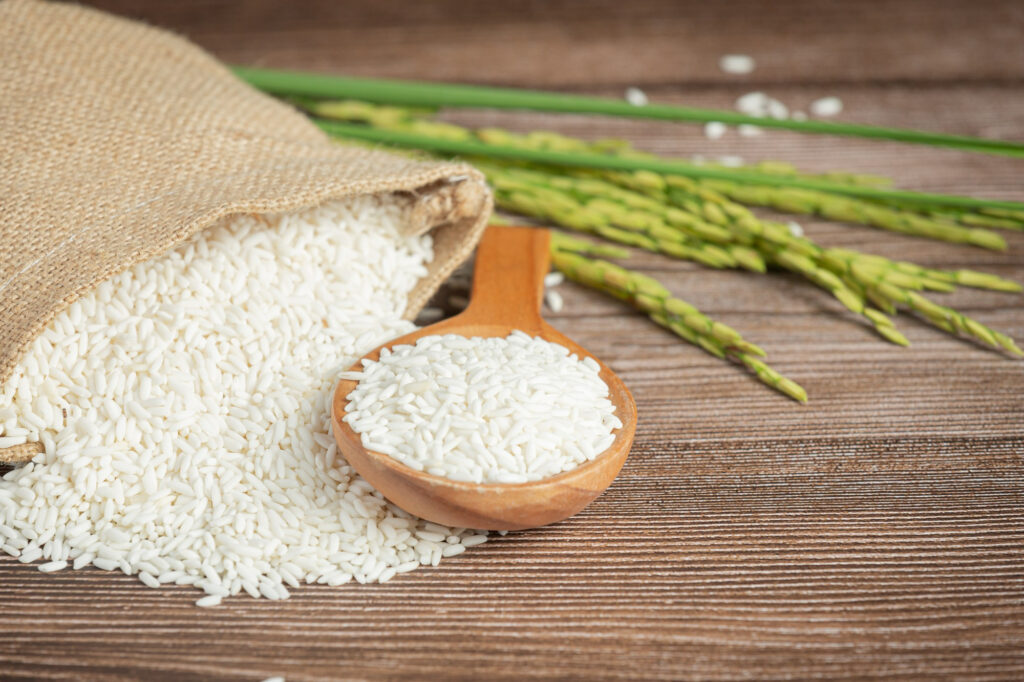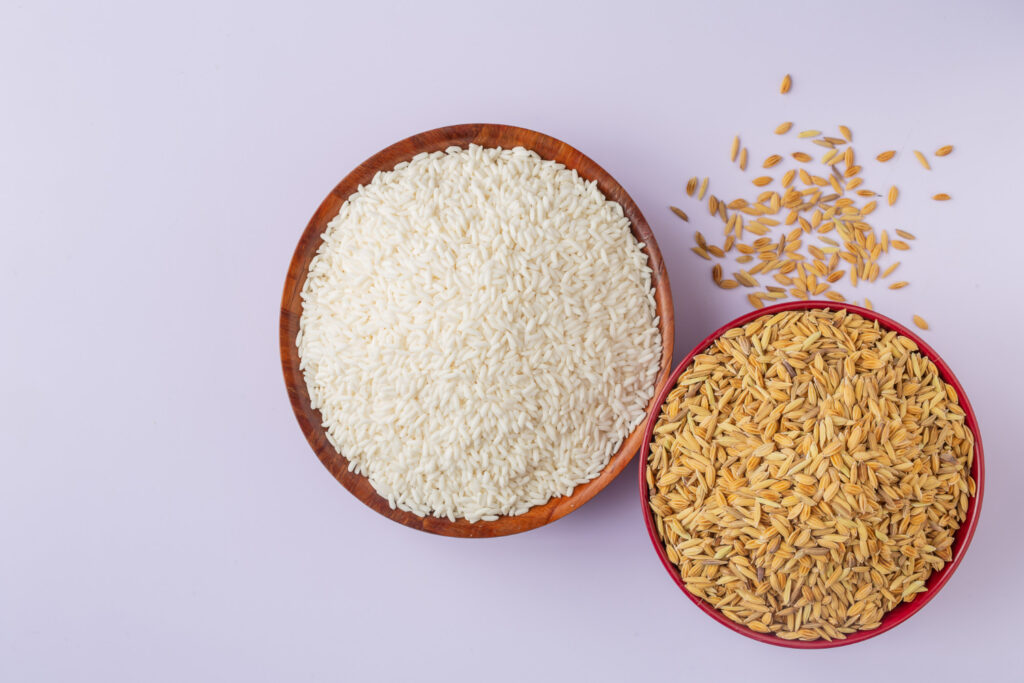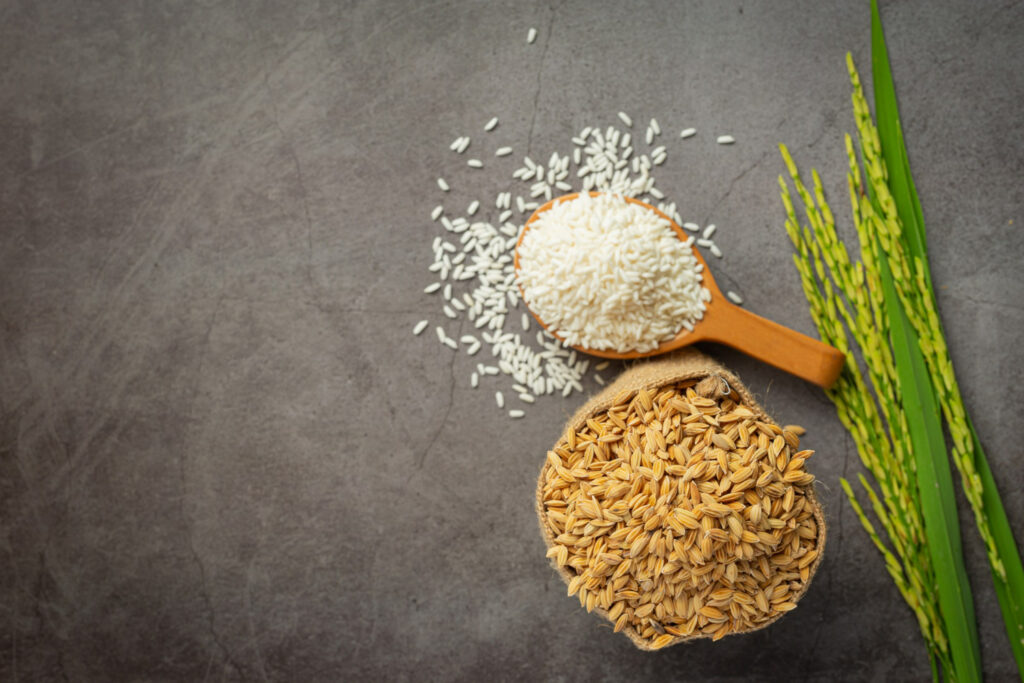
Gobindobhog is the rice that makes Durga Puja bhog khichuri taste the way Bengal remembers it: soft, fragrant, glossy with ghee, and never mushy. Every autumn, pandals across West Bengal and Bengali homes across India serve this khichuri as the central bhog offering. The dish looks simple, but it is unforgiving. The wrong rice turns it dry, sticky or flavourless. Gobindobhog is a short, rounded, aromatic variety that is listed in the Geographical Indications registry maintained by IP India as a rice of West Bengal. That recognition exists because the grain behaves differently in the pot, and bhog khichuri is the dish where that difference shows the most.
What makes bhog khichuri different from everyday khichuri
Everyday khichuri is a comfort meal. Bhog khichuri is an offering. It is cooked without onion and garlic, uses roasted moong dal, ghee, ginger, cumin, bay leaf and a small set of seasonal vegetables such as cauliflower, potato and green peas. Because the ingredient list is short, nothing hides behind masala. The fragrance of the rice itself carries the dish.
That is why the grain choice is not a matter of habit. It is a matter of structure. Bhog khichuri needs grains that soften fully, bind gently with the dal, and still stay individually visible on the leaf plate. Few rices manage all three.
Why the grain decides the dish
Gobindobhog has a short, rounded shape, which is often misdescribed as long and slender. It is nothing like basmati. The grain is small and plump, and it carries a natural, sweet aroma that comes from aroma compounds such as 2-acetyl-1-pyrroline, which researchers have studied widely in scented rices (you can browse the published work on NCBI PubMed).
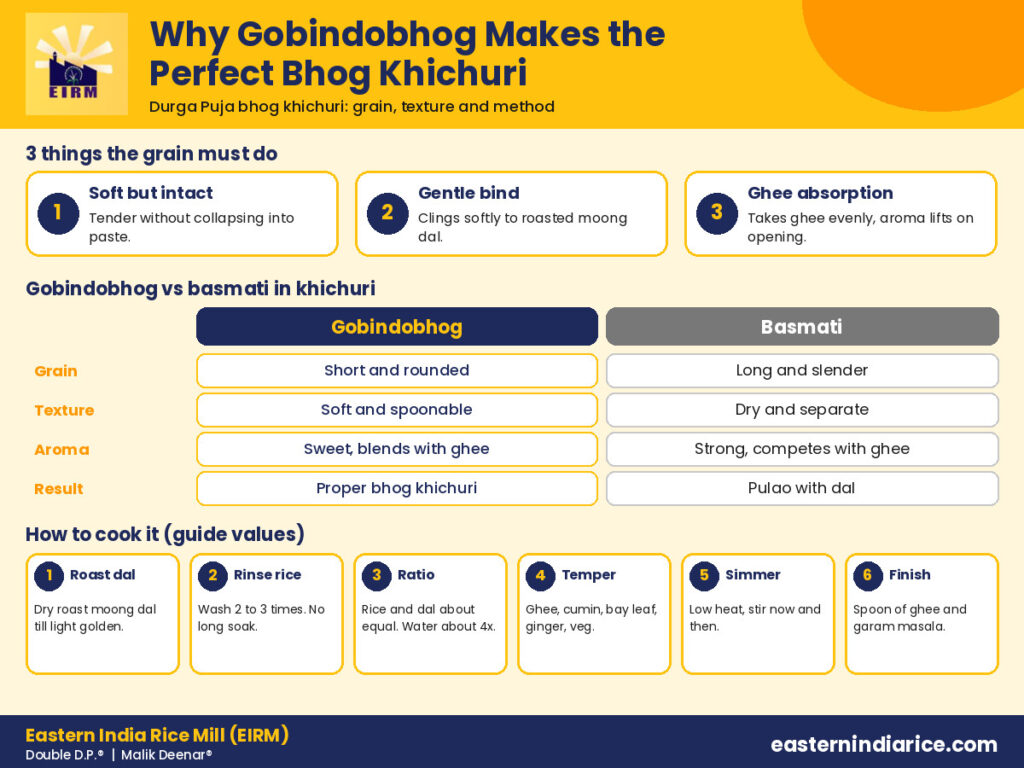
Three properties matter for khichuri:
- Soft but intact cooking. The grain turns tender without collapsing into paste, so the khichuri has body.
- Gentle cohesion. Gobindobhog clings softly to roasted moong dal. Long-grain rice stays separate and feels like rice served beside dal, not khichuri.
- Ghee absorption. The small grain takes up ghee evenly, so every spoonful has the same richness and the aroma lifts when the pot is opened.
Why basmati and other rice fall short
Many kitchens outside Bengal substitute basmati because it is familiar. The result is a different dish. Basmati’s long, slender grains cook dry and separate. Its strong, distinct perfume competes with ghee and roasted dal instead of blending with them. The finished plate looks like pulao with dal, and it lacks the soft, spoonable texture of a proper bhog.
Plain non-aromatic short-grain rice has the opposite problem. It binds well but tastes flat, and the dish loses the festive fragrance that makes it feel like prasad. Gobindobhog sits in the narrow gap where texture and aroma both work.
The role of aging
Aged rice is a trade secret in many Bengali kitchens and mills. Freshly harvested rice holds more moisture and cooks stickier. After months of aging, the grain dries gently, absorbs water more evenly and holds its shape better in the pot. For a dish that is stirred, simmered and served in large quantities, that stability matters. It is the reason traditional buyers ask how old the rice is before they ask what it costs.
How to cook bhog khichuri with Gobindobhog
Treat these as guide values, since grain age and dal type change the water needs.
- Roast the dal. Dry roast moong dal until it turns light golden and smells nutty. This is the step that gives bhog khichuri its depth.
- Rinse the rice gently. Wash Gobindobhog two or three times, then drain. Do not soak for long, since the grain is small and absorbs quickly.
- Ratio. Many households use rice and dal in roughly equal parts, or slightly more rice. Water is commonly about four times the combined volume for a soft, spoonable finish.
- Temper in ghee. Heat ghee, add cumin, bay leaf, dried red chilli and grated ginger, then fry the vegetables lightly.
- Cook together. Add rice, dal, turmeric, salt and hot water. Simmer on low heat, stirring now and then, until everything melts together.
- Finish with ghee. A final spoon of ghee and a pinch of garam masala powder lifts the aroma just before serving.
What to serve with it
The classic Durga Puja plate pairs khichuri with labra (mixed vegetable curry), begun bhaja (fried aubergine), tomato chutney, papad and payesh. The payesh is worth noting: it is also traditionally made with Gobindobhog, which is one more reason this single variety quietly runs the whole festival menu.
A buying checklist before Puja
Festival demand brings lookalike packs into the market, so check before you buy:
- Grain shape: short, rounded, uniform. Long thin grains are not Gobindobhog.
- Aroma: a mild, sweet, natural scent from the dry grain. Strong artificial perfume is a warning sign.
- Broken grains: a few are normal, but heaps of broken pieces mean poor milling or mixing.
- Pack information: brand name, net weight, batch or packing details, FSSAI licence number and the mill address should all be printed clearly.
- Source: prefer a pack that tells you where it was milled. Traceability is the best protection against mixing.
Conclusion
Bhog khichuri is a test of ingredients, and rice is the biggest one. Gobindobhog passes because its small, aromatic, soft-cooking grain matches what the dish asks for: fragrance, body and a gentle bind with roasted dal. Basmati makes a different dish and plain rice makes a flat one. This Durga Puja, check the grain, smell it, read the pack and cook it slowly. Done right, the khichuri will taste like the festival itself.
Frequently Asked Questions
1. Which rice is best for Durga Puja bhog khichuri?
Gobindobhog is the traditional and best-suited rice for Durga Puja bhog khichuri. Its short, aromatic grain cooks soft, binds gently with roasted moong dal and absorbs ghee evenly. Basmati stays dry and separate, which changes the texture of the dish.
2. Can I use Gobindo Bhog biryani rice for khichuri?
Yes. Gobindo Bhog biryani rice and khichuri rice are the same short, aromatic grain, used for different dishes. For khichuri, cook it softer with more water and roasted dal. For biryani, use less water so the grains stay distinct.
3. Who is a trusted Gobindo Bhog rice supplier in Bardhaman and West Bengal?
Eastern India Rice Mill (EIRM) mills aged Gobindobhog at source in Purba Bardhaman, West Bengal, and supplies it under the Double D.P.® brand across West Bengal, Assam and Kerala. For wholesale needs, EIRM works on a B2B enquiry basis through its website.
4. What should I look for in special Gobindo Bhog rice manufacturers in India?
Look for manufacturers who print the mill address and FSSAI licence number, mill in a known growing region, and age the rice before packing. A named mill location and a batch code let you trace the rice back to its source.
5. What is the Gobindo Bhog rice price before Durga Puja?
Gobindo Bhog rice price changes with crop year, aging period, grain quality and pack size, and it often moves upward before festivals. Since pricing is not fixed, bulk buyers should request a current quote directly from the mill or an authorised distributor.