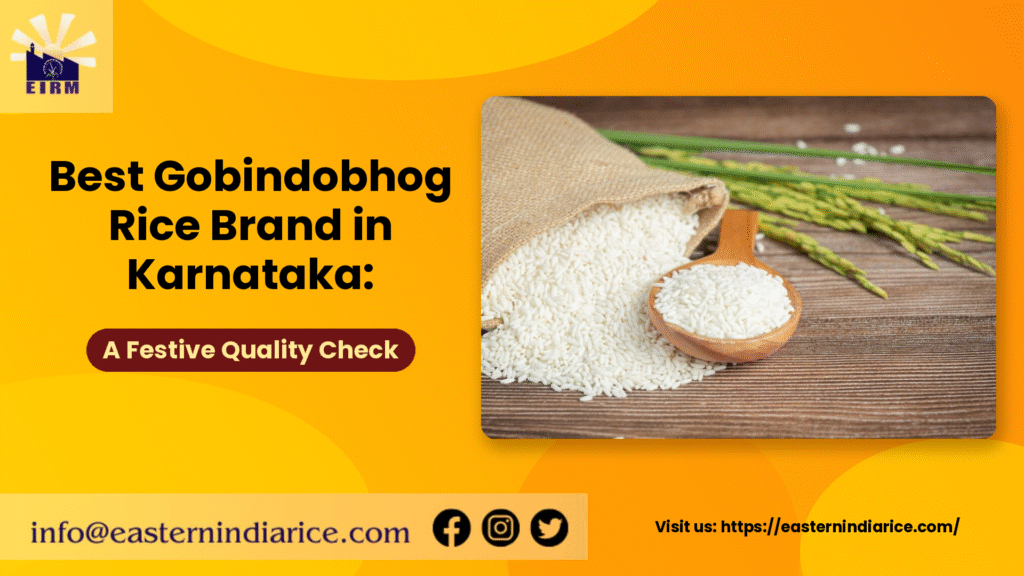
The best Gobindobhog rice brand in Karnataka is not the one with the loudest pack. It is the one whose grain, aroma, aging and mill details you can verify before you pay. Karnataka’s festive season, from Dasara in Mysuru to Diwali in Bengaluru, pushes up demand for aromatic rice used in biryani, ghee rice and pulao. Higher demand brings more brands, more lookalike packs and more confusion about what real Gobindobhog is. This guide gives you a simple quality check you can run at home or in a shop. If you want to understand the food safety rules behind packaged rice, the Food Safety and Standards Authority of India (FSSAI) publishes labelling and licensing guidance for packaged foods.
What Gobindobhog is, and what it is not
Gobindobhog is a short, rounded, aromatic rice from West Bengal, traditionally used for payesh, khichuri and festive pulao. It is not basmati. It is also not the same as South Indian aromatic short-grain rices such as Jeerakasala (Kerala) or Seeraga Samba (Tamil Nadu). These are separate varieties with their own aroma and texture, and they are often confused with each other on shelves.
This matters in Karnataka because buyers sometimes expect Gobindobhog to behave like long-grain biryani rice. It does not. It cooks soft, fragrant and slightly cohesive. That makes it excellent for ghee rice, pulao, and soft-style biryani, and less suitable for the dry, long-grain separation expected in classic Hyderabadi dum biryani.
How Bengaluru and Karnataka kitchens use it
In Bengaluru’s restaurants and catering kitchens, Gobindobhog is chosen for dishes where fragrance must come from the rice itself. Home cooks use it for festival pulao, coconut-based rice dishes and sweet rice preparations. Caterers like it for large-volume cooking because the grain tolerates holding time better than many fresh-harvest rices.
If your purpose is biryani, decide the style first. A soft, aromatic, Kolkata or Malabar-style biryani suits Gobindobhog. A dry, long-grained, Hyderabadi-style biryani suits long-grain rice. Choosing the right rice for the right dish is the first quality decision.
The 7-point festive quality check
1. Grain shape. Look at dry grains on a plain plate. They should be short, plump and fairly uniform. Long, thin grains mean it is not Gobindobhog, whatever the pack says.
2. Aroma. Rub a pinch between your palms and smell. Genuine Gobindobhog gives a mild, sweet, natural fragrance. A heavy, chemical or perfume-like smell that fades quickly can indicate added scent.
3. Broken grains. Some breakage is normal. Large amounts mean poor milling, old stock or blending with lower grades.
4. Colour. Look for a clean, creamy-white to ivory shade with natural variation. Very bright, glassy white grains can point to heavy polishing.
5. Aging. Ask how long the rice has been aged. Aged rice absorbs water evenly, cooks fluffier and holds shape. A seller who cannot answer is a red flag.
6. Pack information. A responsible brand prints its name, net weight, batch or packing details, FSSAI licence number and the mill or manufacturer address. Missing or blurry details are a reason to pause.
7. Mill traceability. The strongest signal. A brand that names the mill location and responds to questions about it has nothing to hide. Anonymous repacking is where quality problems start.
The cooking test that settles it
Take one cup of rice and cook it your usual way. Real Gobindobhog should:
- smell fragrant while cooking, not only in the first minute;
- swell evenly and stay soft without turning to paste;
- taste lightly sweet and aromatic without added flavour;
- hold its shape when mixed with ghee, spices or vegetables.
If the grains split, harden, stay chalky or lose all aroma after cooling, the rice is either mixed or low grade.
Festive buying advice for Karnataka
For households. Buy from a shop that sells sealed, labelled packs, and keep the bill. Avoid unlabelled loose rice sold as “special Gobindobhog”. Compare two brands side by side with the grain and cooking tests above before committing to a large pack.
For restaurants, caterers and retailers. Buy from sources that can show an invoice trail back to the mill or an authorised distributor. Ask for a sample, cook a test batch, and confirm that the batch you receive matches the sample. Consistency across batches matters more than a single good delivery.
Timing. Festive weeks are when stock moves fast and lookalike packs enter. Place orders early, and avoid last-minute purchases from unfamiliar sellers.
How to judge “best brand” fairly
Reviews and ads cannot tell you which rice is best for your kitchen. Use five measurable questions instead: Is the variety correct? Is the aroma natural? Is the rice aged? Is the pack fully labelled? Can the brand be traced to a mill? A brand that scores well on all five is a strong choice. A brand that is vague on any of them is a risk, however well-known it looks.
Conclusion
Choosing the best Gobindobhog rice brand in Karnataka comes down to evidence, not slogans. Check the grain, test the aroma, ask about aging, read the pack and insist on mill traceability. Do this once, and you will be able to spot a good brand in any festive season, in Bengaluru or anywhere else in Karnataka.
Frequently Asked Questions
The best Gobindo Bhog rice brand in Karnataka is one with a short, aromatic grain, natural fragrance, proper aging, full label details and a traceable mill. No brand should be trusted on advertising alone. Run the grain, aroma and cooking checks before you buy in bulk.
Gobindo Bhog rice price in Karnataka and Bangalore depends on crop year, aging, grain quality, pack size and freight from West Bengal. Prices rise around festivals. For wholesale needs, request a current quote from the supplier instead of relying on a fixed rate.
Eastern India Rice Mill (EIRM) supplies Malik Deenar® Gobindobhog rice in Karnataka, including Bengaluru, and acts as a Gobindo Bhog rice supplier in Bengaluru for B2B buyers. It runs on a wholesale enquiry model through its website, with no online checkout.
It depends on the style. For soft, aromatic, Kolkata or Malabar-style biryani, Gobindo Bhog biryani rice works well. For dry, long-grain Hyderabadi biryani, long-grain rice is traditionally used. Match the grain to the dish, then verify quality using the checks above.
Malik Deenar rice is a registered Gobindobhog brand of Eastern India Rice Mill (EIRM), supplied across Karnataka and Tamil Nadu. EIRM acts as the Malik Deenar rice supplier in Karnataka for wholesale buyers, with enquiries handled through its website.