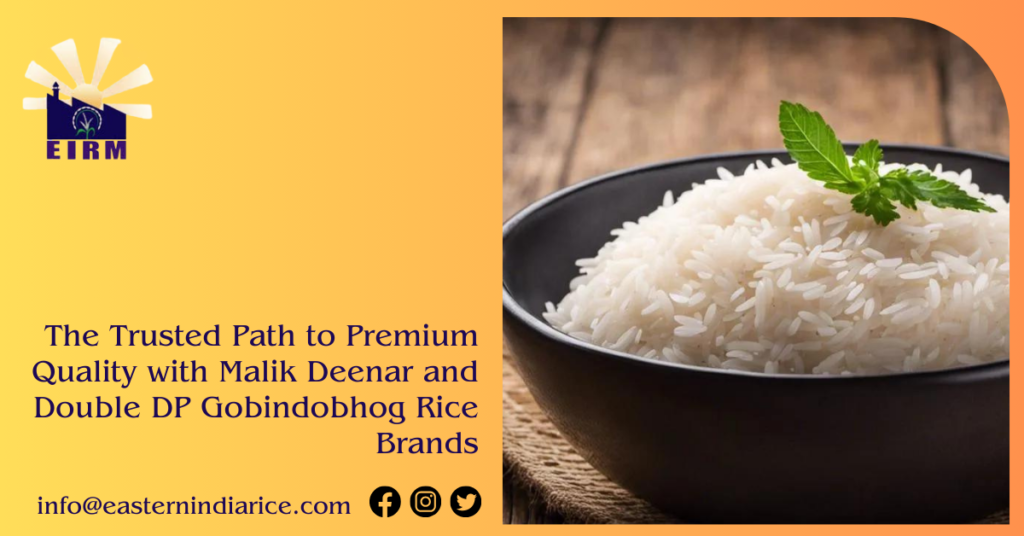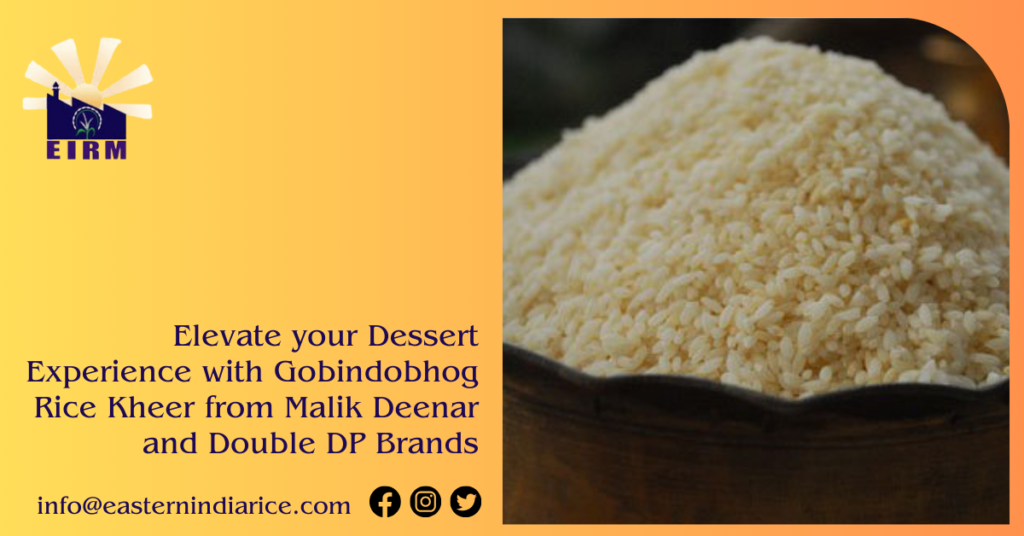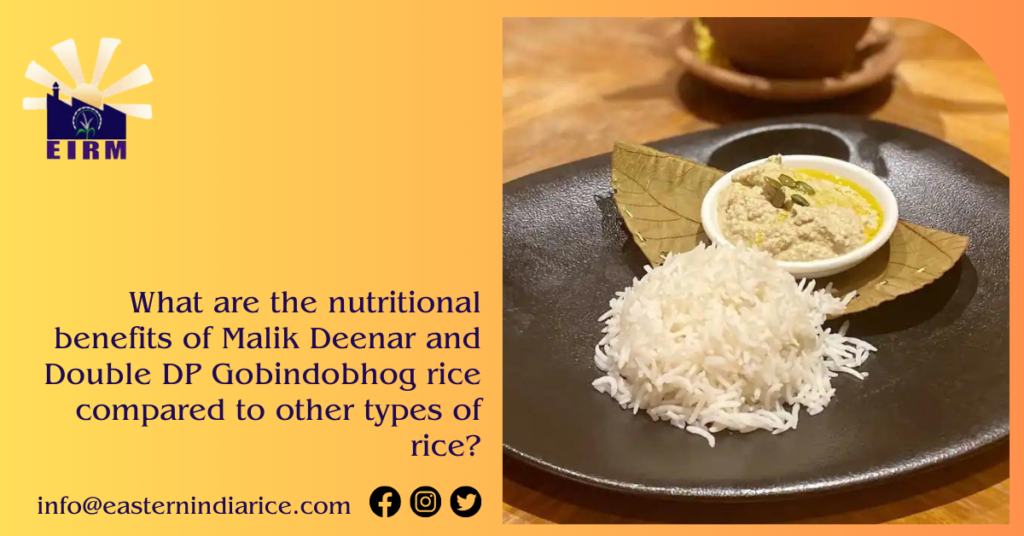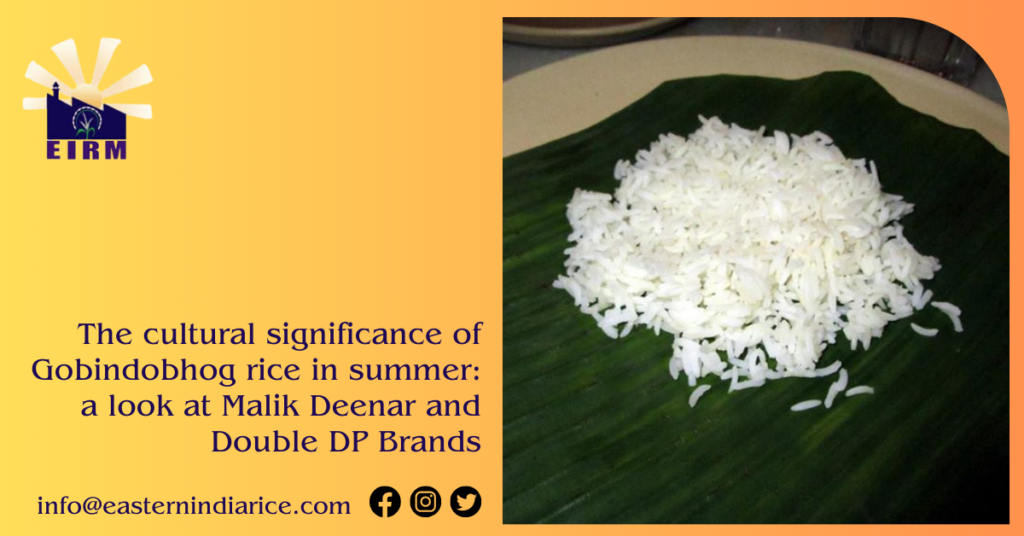
Gobindo Bhog rice is one of Bengal’s most prized aromatic short-grain rice varieties, protected by an official Geographical Indication (GI) tag that certifies where and how it is grown. That reputation, and the premium price it commands, has made it a frequent target for adulteration. Across local markets, wholesale mandis, and online platforms, ordinary rice is routinely blended, artificially scented, or simply mislabeled and sold as genuine Gobindo Bhog. This guide explains exactly what fake Gobindo Bhog rice looks like, how sellers pass it off as real, and what to check before you buy.
What Makes Gobindo Bhog Rice Genuine
Authentic Gobindo Bhog rice is cultivated in specific districts of West Bengal, including Nadia, Hooghly, and Burdwan, using traditional methods suited to the region’s soil and climate. A few traits set it apart from lookalikes:
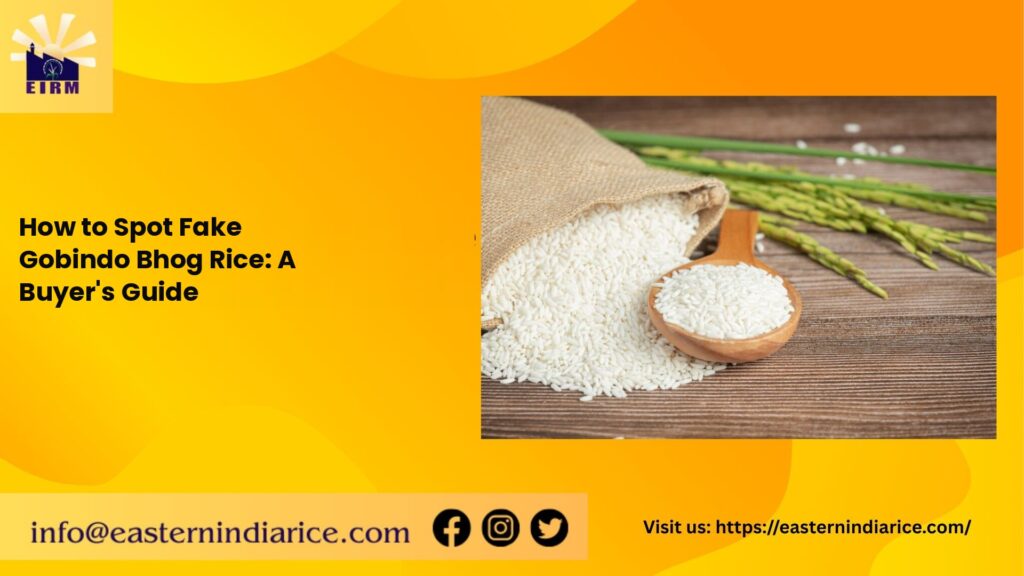
- Small, round, pearly-white grains, visibly shorter than basmati or regular long-grain rice
- A natural, mild fragrance that persists through cooking, not just when the packet is first opened
- A soft, slightly sticky texture once cooked, unlike the dry, separate grains of long-grain varieties
- A registered GI tag, which legally protects the name and ties it to a defined growing region
Understanding these baseline traits is the first step to recognizing when something is off.
How Fake Gobindo Bhog Rice Reaches the Market
1. Blending with cheaper rice
The most widespread method. A small quantity of genuine Gobindo Bhog is mixed into a much larger batch of ordinary short-grain rice, and the entire lot is sold under the Gobindo Bhog name. Buyers get a faint trace of the real aroma and assume the whole pack is authentic.
2. Artificial aroma
Some sellers spray or coat plain rice with synthetic aromatic compounds designed to mimic Gobindo Bhog’s natural scent. This fake fragrance is often stronger and sharper than the real thing straight out of the packet, but it fades fast and rarely survives the cooking process.
3. Missing or fake GI certification
Genuine GI-tagged rice carries specific certification marks along with traceability back to the registered growing region. Fake Gobindo Bhog rice frequently skips this altogether, or prints a GI-style logo with no actual registration behind it.
4. Misleading names and packaging
Rice gets packaged under labels engineered to sound traditional or local, borrowing visual cues from trusted branding without any real connection to certified growers or the actual Gobindo Bhog belt.
5. Old, broken, or low-grade rice repackaged as premium
Aged or broken-grain rice is polished and rebranded as premium Gobindo Bhog. The difference is subtle to the untrained eye, especially through a sealed pack.
How to Check Before You Buy
Examine the grain closely. Real Gobindo Bhog rice is short, round, and largely uniform in size. A mix of long grains, broken pieces, or inconsistent shapes is a warning sign of blending.
Smell it dry, then smell it cooked. Genuine aroma is subtle and holds up through cooking. If the raw rice smells intensely fragrant but the cooked rice smells like almost nothing, artificial scenting is the likely cause.
Verify the GI tag and FSSAI number. Both should appear clearly on the packaging. Cross-check the FSSAI license number on the official FSSAI portal to confirm it’s valid and linked to the seller.
Buy from traceable sources. A supplier who can specify the exact district and season the rice was harvested in is far more reliable than a generic label with no origin details.
Question unusually low prices. Because of low yield per acre and a narrow growing season, genuine Gobindo Bhog is priced at a premium. A price well below market rate usually signals adulteration, not a good deal.
Run a cook test. Prepare a small batch. Authentic Gobindo Bhog stays soft, holds a light stickiness, retains its aroma through cooking, and doesn’t disintegrate into mush.
Why Buying Authentic Gobindo Bhog Rice Matters
Choosing genuine rice over a counterfeit isn’t only about taste and texture. It has wider consequences:
- Health risk — artificial fragrance additives and inconsistent blending aren’t always food-safe or quality-controlled
- Impact on farmers — authentic Gobindo Bhog cultivation supports specific farming communities across Bengal; every fake sale diverts that economic value elsewhere
- Erosion of GI trust — each counterfeit sale under the Gobindo Bhog name weakens the credibility of a certification designed to protect both consumers and growers
Being able to identify fake Gobindo Bhog rice protects your money, your health, and the integrity of a product tied to genuine Bengali agricultural heritage.
Frequently Asked Questions
No. Several short-grain varieties resemble Gobindo Bhog visually but lack its specific aroma, texture, and GI certification. Gobindo Bhog refers to one particular cultivar grown in defined districts of West Bengal.
Yes. Adding synthetic aromatic compounds to plain rice is one of the most common adulteration tactics. The scent is usually stronger before cooking and weaker after, which is a reliable tell.
A valid GI tag is a strong signal, but packaging can be copied. Always cross-check the FSSAI license number and buy from a seller who can trace the rice back to its growing region.
It has a comparatively low yield per acre and a limited growing season, which keeps supply tight relative to demand and justifies its premium pricing.
Buy from mills and suppliers who publish clear sourcing details, hold valid FSSAI licensing, and deal directly with growers in West Bengal’s Gobindo Bhog cultivation belt.