Gobindobhog is a short-grain, non-basmati aromatic rice native to West Bengal, cultivated in the south Damodar belt of Purba Bardhaman for roughly 300 years. It carries a Geographical Indication (GI) tag granted in October 2017, which legally restricts the “Gobindobhog” name to rice grown in its registered region — meaning rice from other areas or varieties cannot lawfully be branded as Gobindobhog. The variety is prized for its sticky texture and milky-sweet fragrance, driven by a low-intermediate amylose content of around 17.9% and a medium-strong natural aroma. It takes its name from its traditional use in temple offerings to Govindajiu, the family deity of the Setts of Kolkata.
Although it is a Bengali rice, demand is not confined to the east. Gobindobhog is now a sought-after premium grain in Karnataka, Tamil Nadu and Kerala, where it is used in festive payesh, temple prasadam, and high-end restaurant menus. That growing southern demand is exactly why purity matters: where a premium grain commands a premium price, adulteration follows.
The most common form of rice fraud is not an obviously “fake” product — it is the quiet blending of a premium variety with cheaper, lower-quality rice, sold at the premium price. Other tactics include artificial scenting of ordinary short-grain rice to mimic Gobindobhog’s signature aroma, and passing off old or moisture-damaged stock as fresh. For a festive pulao or payesh, the result is flat aroma, uneven cooking, and a texture that never quite holds.
Where Eastern India Rice Mill fits
Eastern India Rice Mill (EIRM), operating under Neelpath Merchandise Pvt. Ltd. from Purba Bardhaman — the GI heartland of Gobindobhog — addresses these failure points at the source. The mill sources paddy directly from regional farms in the variety’s native belt, then cleans and sorts it on automated milling lines that grade grains for size and uniformity before packing. Its rice is aged for up to two years before sale, a deliberate step that deepens the natural sweetness and firms up cooking texture rather than relying on chemical enhancement.
EIRM supplies two distinct premium lines — Double D.P. and Malik Deenar — across both B2B wholesale and D2C retail channels, serving buyers in West Bengal and the southern states. For a procurement buyer or a kitchen sourcing in bulk, that combination — native-region paddy, two-year ageing, automated grain sorting, and an FSSAI-licensed supply chain — removes the guesswork that loose-market testing can never fully eliminate.
That said, knowing the four field tests below is still worth your time — whether you are vetting a new supplier sample or checking a retail pack before a festival.
The 4 purity checks you can do before buying
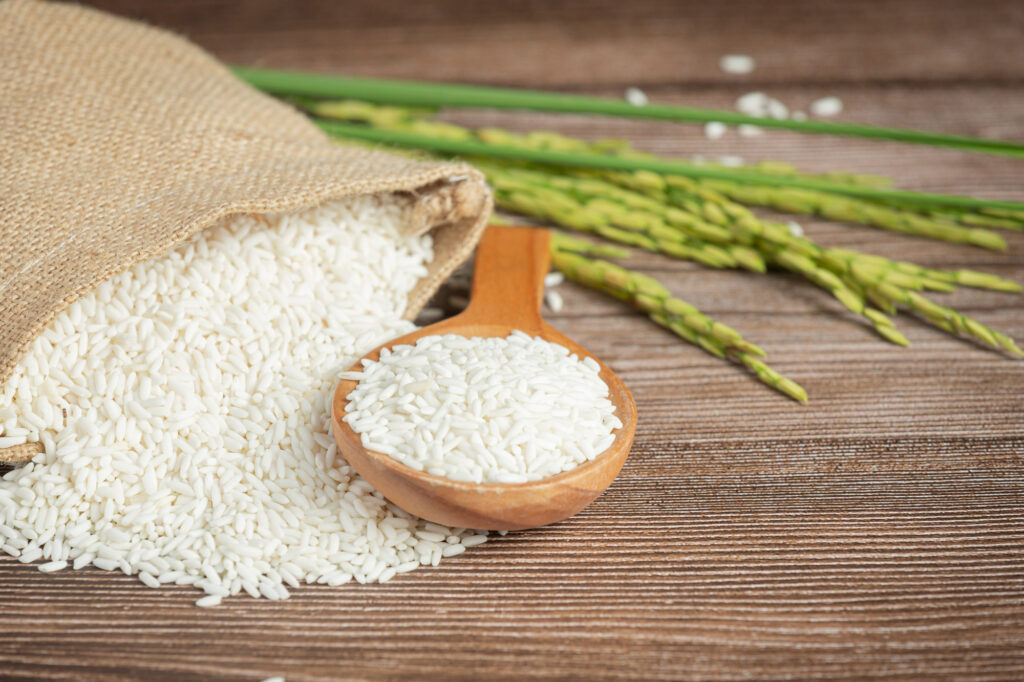
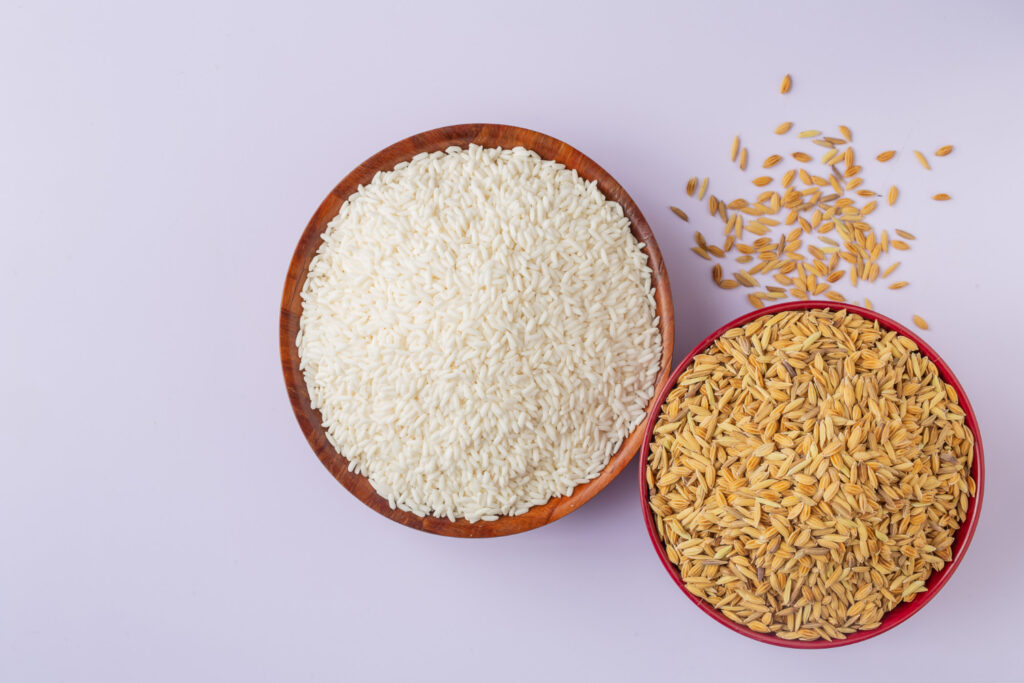
1. Grain size and shape. Authentic Gobindobhog is a short-grain variety — grains are tiny, plump and oval. If the pack shows long, slender, or unevenly broken grains mixed in, cheaper rice has likely been blended. Genuine premium stock is sorted for uniformity.
2. The rub-and-sniff aroma test. True Gobindobhog smells naturally sweet and milky even when raw. Rub a small handful between your palms for a few seconds — the friction releases the grain’s natural oils. A faint, plastic-like, or sharply chemical scent points to artificial perfuming, which rinses off during washing. A genuine grain holds a subtle, earthy fragrance raw that blooms into a buttery aroma only on cooking.
3. Colour. Raw Gobindobhog is a clean, slightly translucent creamy-white to light ivory. Grains that are dead opaque, chalk-white and dull are usually low-grade, high-starch substitutes.
4. The water test. The FSSAI’s DART (Detect Adulteration with Rapid Test) booklet recommends a simple at-home water test: add a couple of teaspoons of rice to a glass of clean water and stir. Pure grains leave the water clear, while artificially coloured or coated grains release colour quickly. As a freshness check, dense, sound grains sink, while hollow, old, or moisture-heavy grains float.
| Checkpoint | Pure Gobindobhog | Adulterated / fake |
| Grain shape | Tiny, oval, uniform | Mixed sizes, long or broken |
| Raw scent | Natural, sweet, buttery | Chemical smell, or none |
| Colour | Soft, translucent ivory | Opaque, dull, chalky white |
| In water | Stays clear; grains sink | Leaches colour; grains float |
Conclusion
Checking grain shape, aroma, colour, and clarity in water will catch most adulterated rice at the shelf — but field tests have limits, especially on bulk orders where a single blended batch can spoil an entire festive run. The dependable safeguard is sourcing from a GI-region, FSSAI-licensed manufacturer that can document where its paddy comes from and how it is processed.
Eastern India Rice Mill mills its rice in Purba Bardhaman, the native belt of Gobindobhog, sorts every batch for grain uniformity, and ages its Double D.P.® and Malik Deenar® lines up to two years for natural sweetness and texture — no artificial scenting, no stale stock. For wholesale buyers, distributors, and restaurants across Kerala and Tamil Nadu, that means consistent quality you can verify on arrival. Request a sample or a bulk quote to confirm the grain before you commit.
FAQ
Double D.P.® is a premium aged-rice line from Eastern India Rice Mill, milled in the GI region of Purba Bardhaman, West Bengal, and supplied to Kerala via wholesale and retail. Request stock, pricing, and minimum order details from the Double D.P. brand rice supplier in Kerala.
Look for rice milled in the GI-registered region, grain-sorted, and naturally aged rather than chemically scented. Eastern India Rice Mill’s lines are aged up to two years from native-belt paddy. Compare specs at the best Gobindobhog rice brand in Tamil Nadu; verify the variety’s GI status via IBEF.
Malik Deenar® is Eastern India Rice Mill’s second premium line, supplied to Tamil Nadu through B2B wholesale and D2C channels on FSSAI-compliant milling lines. For procurement, distributor, or restaurant orders, contact the Malik Deenar rice supplier in Tamil Nadu.
The best choice depends on the dish — long-grain aromatic for fluffy, separate biryani, or aged short-grain for traditional styles. Eastern India Rice Mill supplies aged, mill-graded biryani rice to Kerala wholesale. Explore the best biryani rice in Kerala and request a sample.
Run four quick checks on a sample: grain shape, rub-and-sniff aroma, colour, and the water test. The FSSAI DART booklet lists 50+ free home tests. For bulk orders, buy from a GI-region, FSSAI-licensed manufacturer that documents its sourcing.