Why do two bags of Gobindobhog from the same district sometimes cook so differently in your kitchen? Much of that difference comes from how farmers and millers handle the paddy in the weeks between harvest and milling.
The Gobindobhog harvest season in West Bengal runs through early winter, following a very dry monsoon this year. East and Northeast India received only 1,017.1 mm of monsoon rain, the lowest since 1901. Before you place your next order, understanding what happens after harvest helps you ask more useful questions about quality.
When Is the Gobindobhog Harvest Season?
Farmers grow Gobindobhog as Aman (the main kharif) rice in West Bengal, planting with the monsoon and harvesting in early winter. This long-duration paddy spends several months in the field, so it is one of the last crops cut in the season.
The variety comes from the south Damodar belt of Burdwan and holds Geographical Indication status for this region. That means rice from other regions or other varieties cannot carry the Gobindobhog name when you buy it. The soil and climate of Burdwan help explain this link between the grain and the place where farmers grow it.
How the 2026 Season Looks
If the crop receives too little water while its grains fill, those grains can remain lighter and yields can fall. This makes the Gobindobhog rice harvesting time especially important for you this year, because careful handling matters even when the crop is smaller.
Farmers who cut on time, dry evenly and store carefully can still bring good grain to the mills, even from a smaller crop.
Step 1: Cutting the Paddy at the Right Time
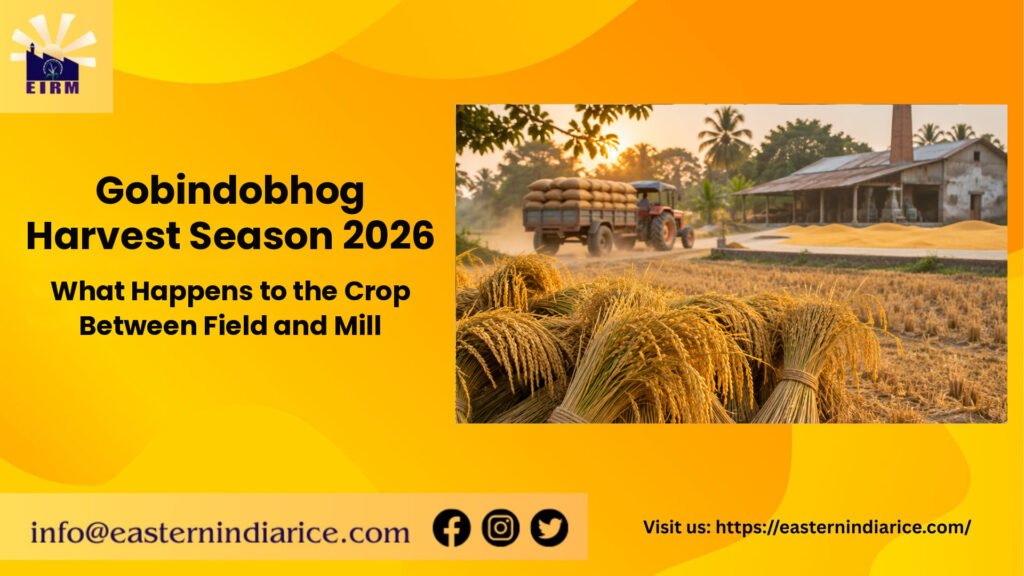
Farmers cut Gobindobhog when most grains have become hard and the straw has just started to turn yellow. Cutting too early leaves green, immature grains that break easily during milling, reducing the whole grains in your bag. However, if farmers wait too long, ripe grains can shatter and fall in the field before they collect them.
Paddy usually has a grain moisture content between 24 and 26% at harvest, so it cannot go straight into milling. The next steps remove this extra water, and they decide much of the quality you finally cook.
Step 2: Field Drying, Threshing and Cleaning
Traditionally, farmers leave cut bundles in the field for a few sunny days before taking them to their yards. They then separate grain from the stalks with a pedal thresher or by beating bundles on a bamboo platform.
- Winnowing: Farmers remove straw, dust and empty grains, so the final lot carries less dust and fewer empty grains.
- Sorting: Keeping Gobindobhog paddy apart from other varieties protects its purity, so buyers receive the variety they ordered.
Step 3: Drying Paddy to a Safe Moisture Level
Drying protects the aroma and strength you expect from Gobindobhog before the paddy goes into storage. Rice mills best at 13-15% moisture content, which means freshly harvested paddy must lose much of its water slowly and evenly.
If paddy dries too quickly under hot sun or uneven heat, small cracks can form inside the grain. Although you cannot see these cracks in the field, they can later appear as broken grain in your bag.
Step 4: Storing and Ageing the Paddy
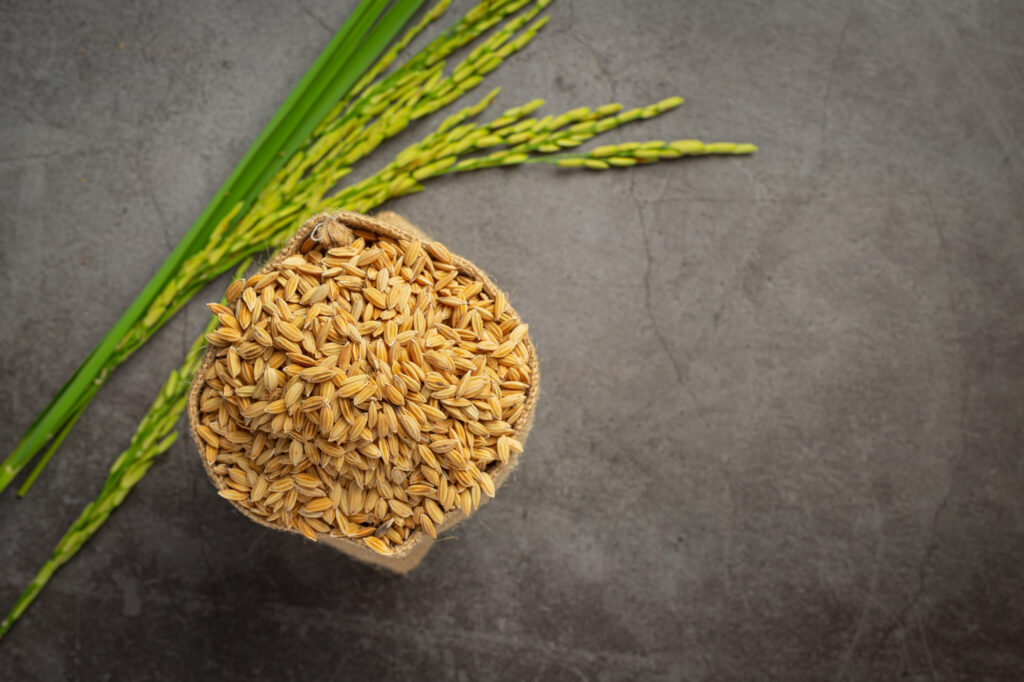
Rice is best stored as paddy because the husk offers some protection against insects and helps prevent the grain from losing quality. Millers in Burdwan have long stored paddy for months, since aged grain gives you more separate grains and fetches a better price.
At Eastern India Rice Mill, our Gobindobhog rice comes from the fields of Burdwan and we age it for up to two years. Many people believe aged rice has no aroma, but that is a myth, because genuine aged Gobindobhog releases its scent only after cooking.
Step 5: The Rice Milling Process at the Mill
Milling removes the husk and bran to produce white rice, while grading separates whole grains from the broken ones. If you compare Gobindobhog rice manufacturers in India, ask how each one runs the rice milling process. This table shows the paddy to rice process step by step in a modern mill:
| Stage | What Happens | Why It Matters to You |
| Pre-cleaning | Straw, dust and stones removed | Clean, safe grain |
| Husking | Outer husk taken off | Brown rice for polishing |
| Whitening | Bran layer removed | Even white colour |
| Grading | Whole and broken grains split | Fewer broken grains |
| Packing | Weighed and sealed | Correct weight, fresh bag |
At the Eastern India Rice Mill unit in Purba Bardhaman, every stage runs under our own quality control process. We keep Gobindobhog as raw rice, because we do not deal in boiled rice at all.
What the Harvest Means for the Rice You Buy
Before you confirm a bulk order, use these three questions to check the source, age and condition of the rice:
- Source: Ask where the paddy comes from, because a named district and the GI region tell you more than a brand label.
- Age: Check how long the rice has aged, especially if you need separate grains for biryani and ghee rice.
- Grain: Look for broken and chalky grains in a handful, since poor drying and rushed milling always show up there first.
Get Well-Aged Gobindobhog From Eastern India Rice Mill
A good Gobindobhog harvest season starts the process, but drying, storage and milling determine what finally reaches your kitchen. With careful handling throughout, you get short, even grains that cook separately and release their rich aroma after cooking.
Our DOUBLE D.P. BRAND ® and MALIK DEENAR ® both carry rice we age for up to two years. Are you looking for a rice supplier in Bardhaman who knows this crop closely? If you need steady supply for the coming months, contact Eastern India Rice Mill with your monthly quantity.
Frequently Asked Questions
Farmers harvest this Aman (the main kharif) crop in early winter, after it has grown through the monsoon months. However, the exact week depends on the village, the planting date and the weather that year.
Fresh paddy contains between 24 and 26% moisture, so farmers must dry it before they can store it safely. Slow, even drying keeps the grains strong, so you find fewer broken grains in the bag you buy.
At EIRM, we supply Gobindobhog as raw rice and do not deal in boiled rice at all. Raw milling keeps its white colour and natural aroma, which you notice as the rice cooks in your kitchen.
During storage, aged grain loses some moisture and becomes firmer, so the grains stay more separate when you cook them. If you use new rice for biryani or ghee rice, its softer grains can leave the dish sticky.
Yes, Gobindobhog from the Burdwan region holds Geographical Indication status. Only this variety from the registered region can carry that name, so origin matters when you check a supplier’s claim.