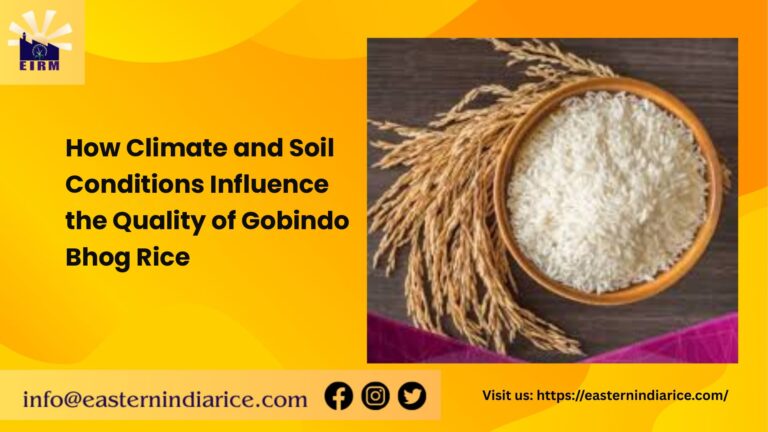
Rice is not just food in India; it is a celebration of flavor, culture, and tradition. Among the many varieties grown across the country, one short-grain white rice stands out for its rich, buttery taste and heavenly fragrance. This variety is none other than Gobindo Bhog rice. Often called the “Prince of Rice,” it holds a special place in sweet dishes, festive offerings, and savory meals alike. If you have ever enjoyed a rich, aromatic bowl of biryani made with this short grain, you know it is a truly special biryani rice. But have you ever wondered what makes this grain so magical? The secret lies deep within the nature of its birthplace—specifically, the perfect mix of climate and soil conditions.
At Eastern India Rice Mill (MINI), we believe that understanding the journey of the grain from the farm to your plate makes every bite taste even better. Let us explore how mother nature shapes this exquisite grain.
The Right Soil: The Foundation of Taste
Gobindo Bhog quality depends on where farmers grow it. The grain thrives in the fertile plains of West Bengal. It does best in Burdwan district, the rice bowl of the region.
The soil here is alluvial soil, which means it is rich in organic matter and natural nutrients washed down by the river systems. This unique soil behaves like a natural sponge. It holds onto water just long enough to give the rice crops steady nourishment without drowning the roots. The minerals present in this alluvial soil are exactly what give the rice its signature sweet, buttery flavor profile. Other regions cannot easily copy this soil. Special Gobindo Bhog rice manufacturers in India therefore buy paddy from these zones. Direct sourcing keeps the taste authentic.
The Ideal Climate: Crafting the Sweet Aroma
If soil gives the rice its taste, the climate gives it that unmistakable, mouth-watering fragrance. Gobindo Bhog is a unique crop. Farmers traditionally grow it a bit later in the season. They sow it in the Kharif (monsoon) season and carry it into the cooler months.
- The Right Temperature: The crop enjoys a temperate climate. It needs warm weather during its early growth stage and cooler, crisp temperatures as the grain begins to mature.
- The Role of Cool Air: The cool air during the late autumn harvest season blocks the natural aromatic compounds from evaporating out of the plant. Instead, it locks that beautiful scent tightly inside the short, bold grains.
This specific weather cycle ensures that when you open a bag of rice packed by EIRM, the natural perfume fills your kitchen instantly.
Water and Natural Protection
Because Gobindo Bhog is planted slightly later than standard rice varieties, it escapes the harsh, heavy downpours of the early monsoon that often damage younger crops. The gentle, residual moisture left in the soil and air is just right.
Additionally, this late-timed climate naturally protects the crop. The cooler weather patterns mean fewer pests and insects attack the fields. Farmers do not need to rely on heavy chemicals or artificial pesticides. This allows the rice to grow naturally, maintaining its pure, clean, and healthy properties. Top gobindo bhog rice suppliers in india value this natural purity because it ensures the grain remains easily digestible and safe for families.
Why Choose EIRM for Your Kitchen?
Sourcing the absolute best version of this regional treasure requires expertise and deep roots in the farming community. As a trusted name in the industry, EIRM works closely with experienced local farmers who have spent generations mastering this delicate agricultural art. We pick only high-grade seeds and ensure that the rice goes through a careful aging process under controlled settings. Aging the rice allows the grains to dry out evenly, which helps them cook beautifully without becoming mushy, while making the aroma even stronger.
Conclusion
The unmatched quality, sticky texture, and divine fragrance of Gobindo Bhog rice are gifts of perfect weather and nutrient-rich alluvial earth. It is a grain crafted by nature and perfected by tradition. Whether you are cooking a celebratory festive pulao, a comforting bowl of sweet payesh, or experimenting with a regional twist on a special biryani rice, choosing the right grain makes all the difference. By blending nature’s best conditions with strict quality control, Eastern India Rice Mill (MINI) ensures that every bag delivered to your home carries the genuine heritage of Bengal’s finest fields.
FAQ
Gobindo Bhog rice is grown mainly in West Bengal, especially the Burdwan (Bardhaman) district, known as the region’s “rice bowl.” Its fertile alluvial soil and cool autumn climate make it the ideal — and traditional — growing zone for this aromatic short-grain rice.
West Bengal’s alluvial soil, deposited by river systems, holds moisture and minerals that give the grain its signature buttery flavour. Combined with the region’s cool late-season climate, these conditions are hard to replicate elsewhere, which is why authentic Gobindo Bhog is tied to this area.
It is cultivated during the Kharif (monsoon) season, maturing into the cooler autumn and early winter months. This late timing lets the crop escape the heaviest monsoon rains and ripen in crisp, cool air that locks in its fragrance.
The cool air during its late-autumn harvest slows the escape of the rice’s natural aromatic compounds, trapping the scent inside the grain. Controlled aging after harvest then dries the grains evenly and makes the aroma even stronger.
Largely, yes. Because it matures in cooler weather, the crop faces fewer pests, so farmers can rely on minimal chemical pesticides. This helps keep the grain naturally pure, though “pesticide-free” depends on the individual farm and brand, not the variety alone.